
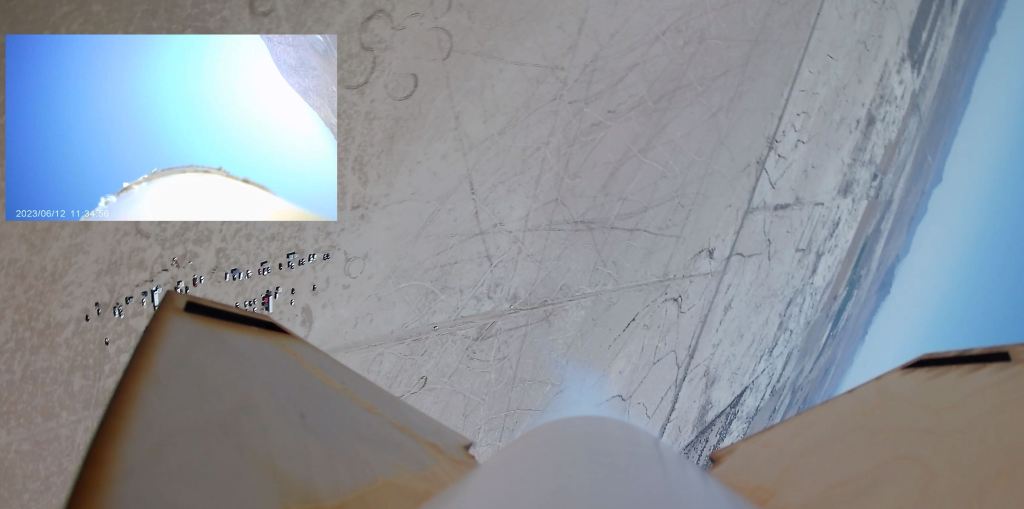
“Huh, that looks like smoke.”
It was indeed smoke. And, as they say, “where there’s smoke, there’s fire.” In this case, there was a fire aboard the Pleiades 3 rocket. Though this launch ended up being a successful flight for our team, a fire is not exactly what you want to see (except for very specific parts of the motor and the motor only). So to learn from this flight we will first need to do an autopsy. In this article we will conduct this autopsy to answer the questions:
- What happened?
- What started the fire?
- How do we know what started the fire?
What Happened?
First, let us set the scene! It is July in the Mojave Desert of Southern California, 102 degrees Fahrenheit. Due to a fire on another flyer’s rocket, our rocket is sitting in the sun for far longer than expected. Of course, the cameras on board are all facing the sunny side and of course their cases are black, to soak up the maximum amount of thermal energy. It is 11:00 a.m. local time and you are pacing, sweat soaking your burning back as you wait. Is your new 4K camera going to keep running? Is the hatch on the modified nose cone going to stay closed? No telling for now.
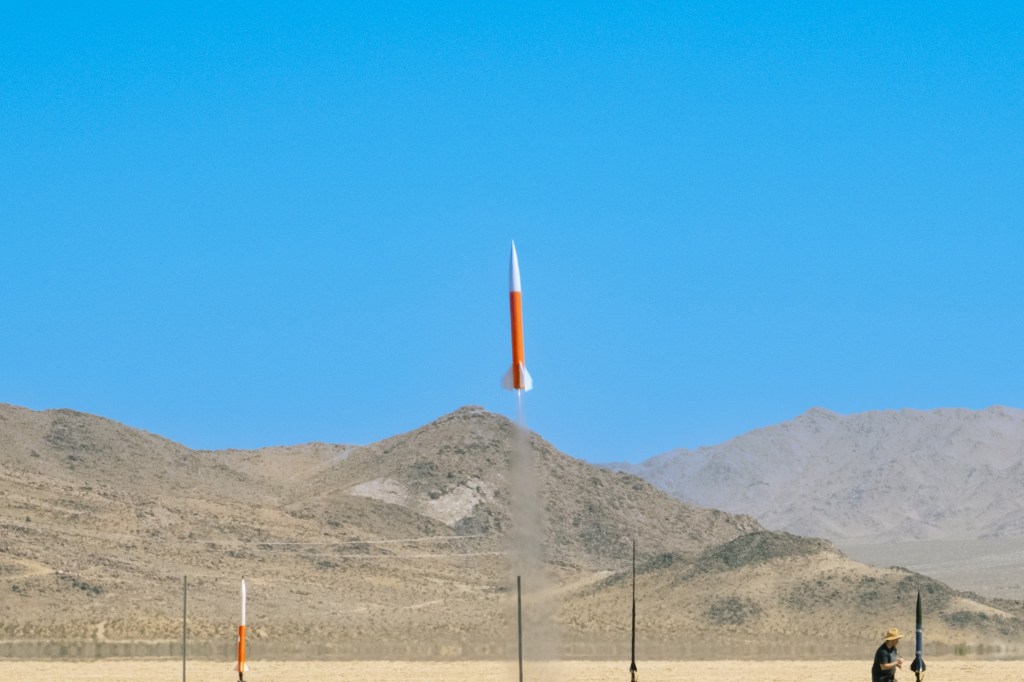
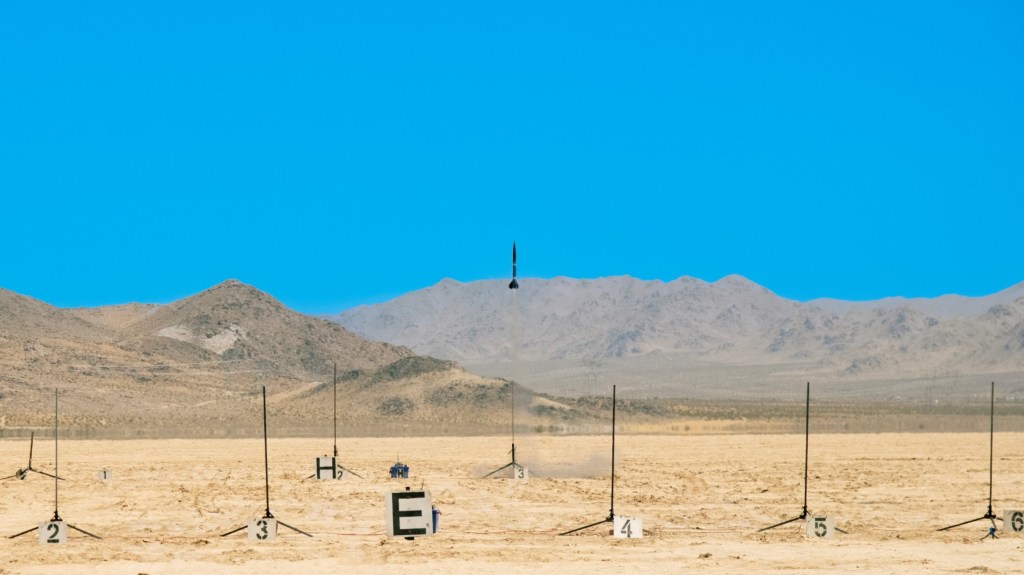
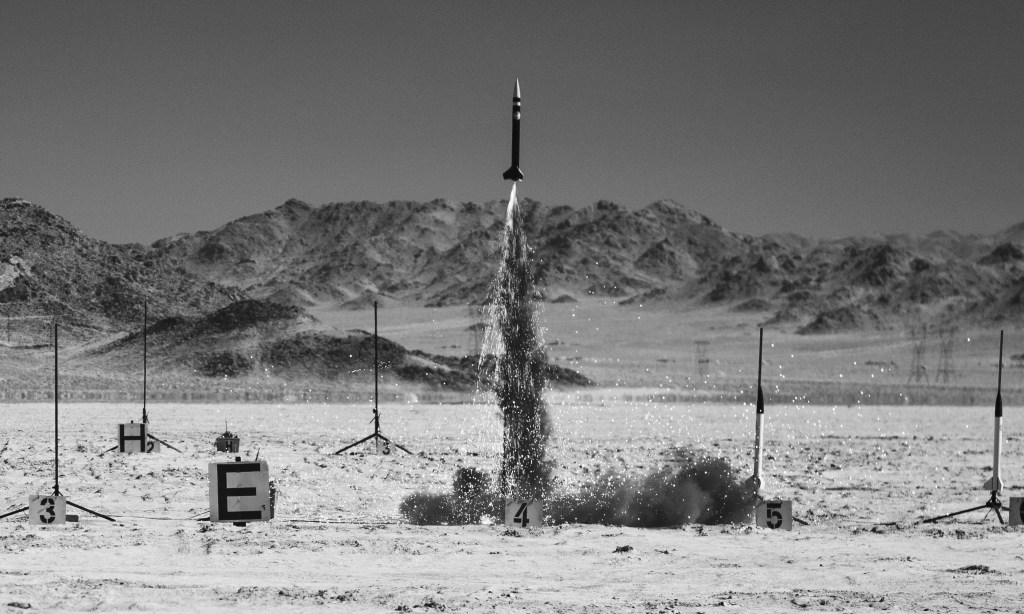
You hear your name and your pad number, it is finally time, the 102-degree heat disappears from your mind and you see your rocket scream into the sky. You hold your breath waiting for the parachute to deploy, after all, will that nose cone hold together?
Finally, you see it! There’s the chute! But alas here comes the quote from the start of the article “Huh, that looks like smoke.” A picture taken at random from an iPhone captures the puff seen here:
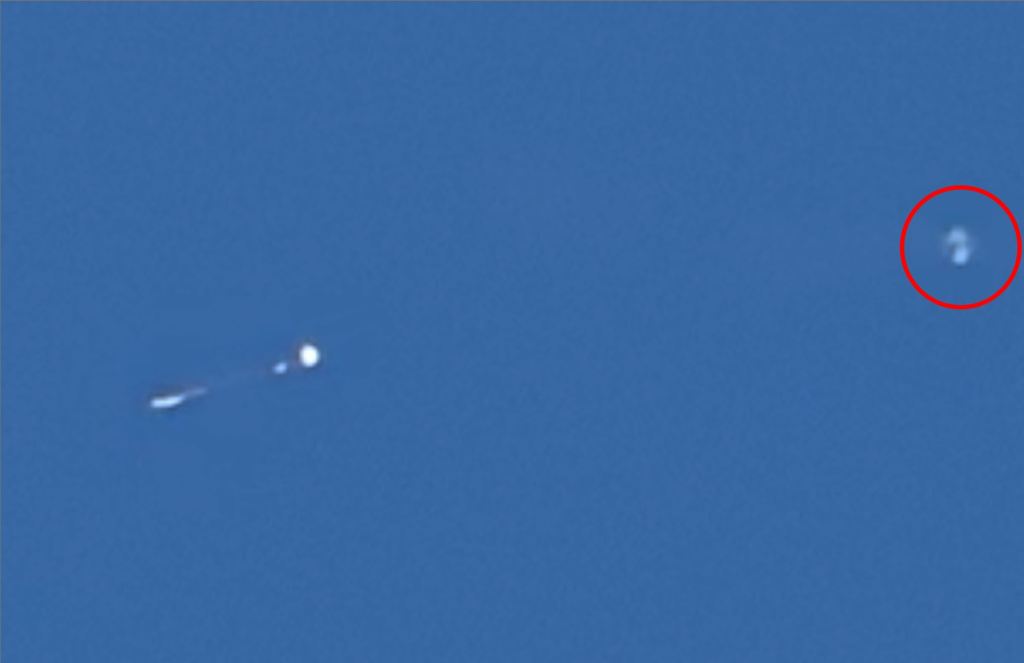
The damage is immediate when you walk across the desert floor. The smell of burnt plastics is much more apparent this time than other launches. I might be a little dramatic here, since the rocket did largely survive and even the nose cone survived perfectly with the two altimeters and two cameras all in working order. Woo, time to take a deep breath and start the investigation!
What Did We Find?
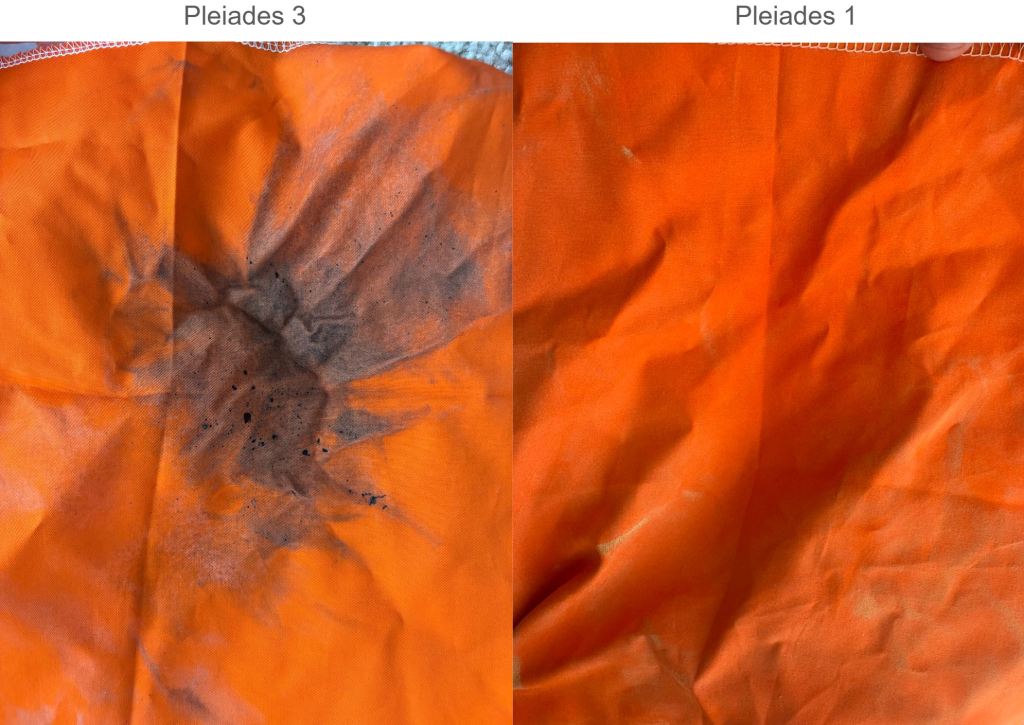
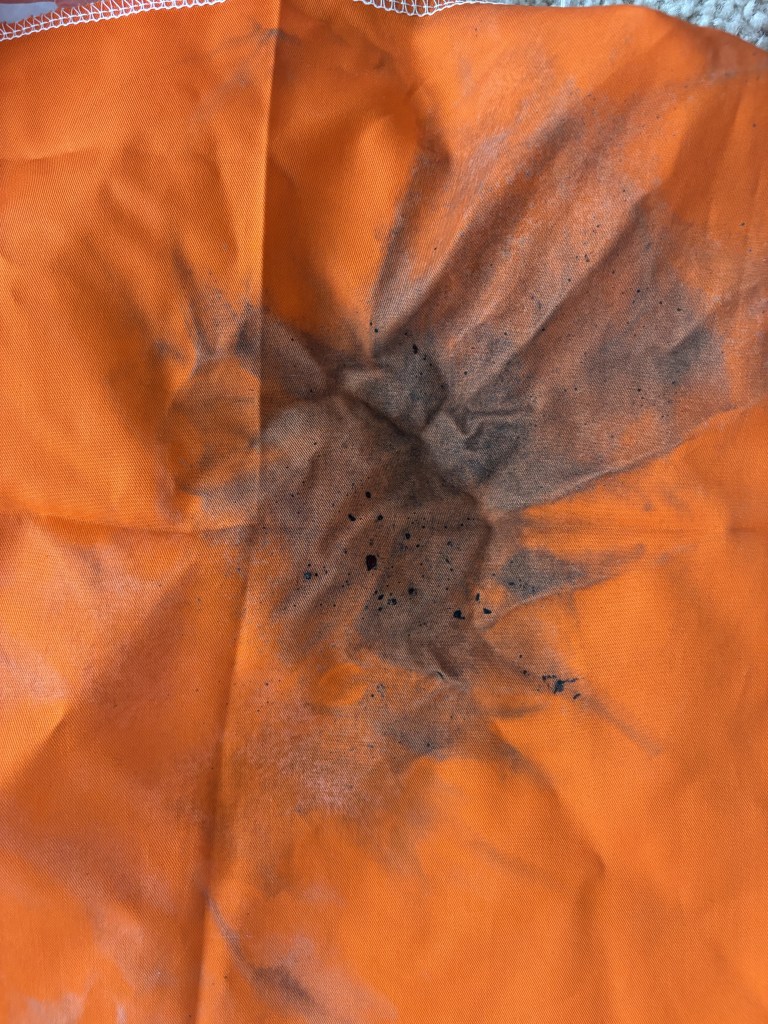
To start, let us look at some of the clearest examples of fire damage in the rocket. First seen here is the parachute protector, which is a cloth that the parachute is wrapped in to protect it from the black powder charge that pushes the nose cone and parachute out. This image compares the protector after the flights of Pleiades 3 and Pleiades 1:
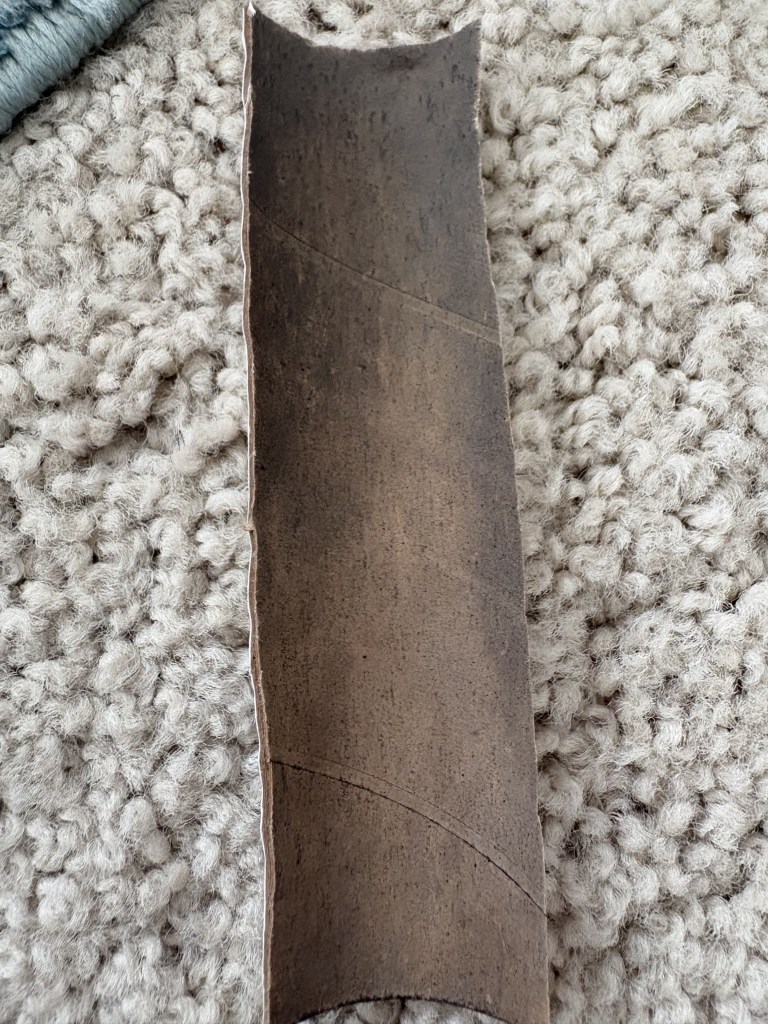
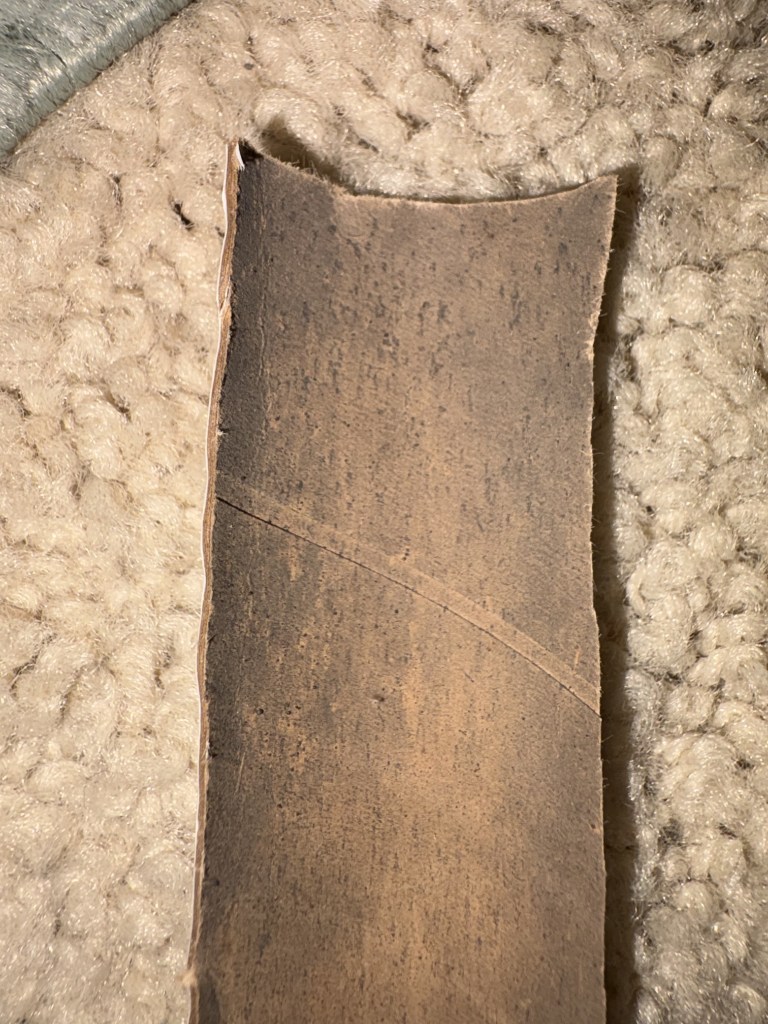
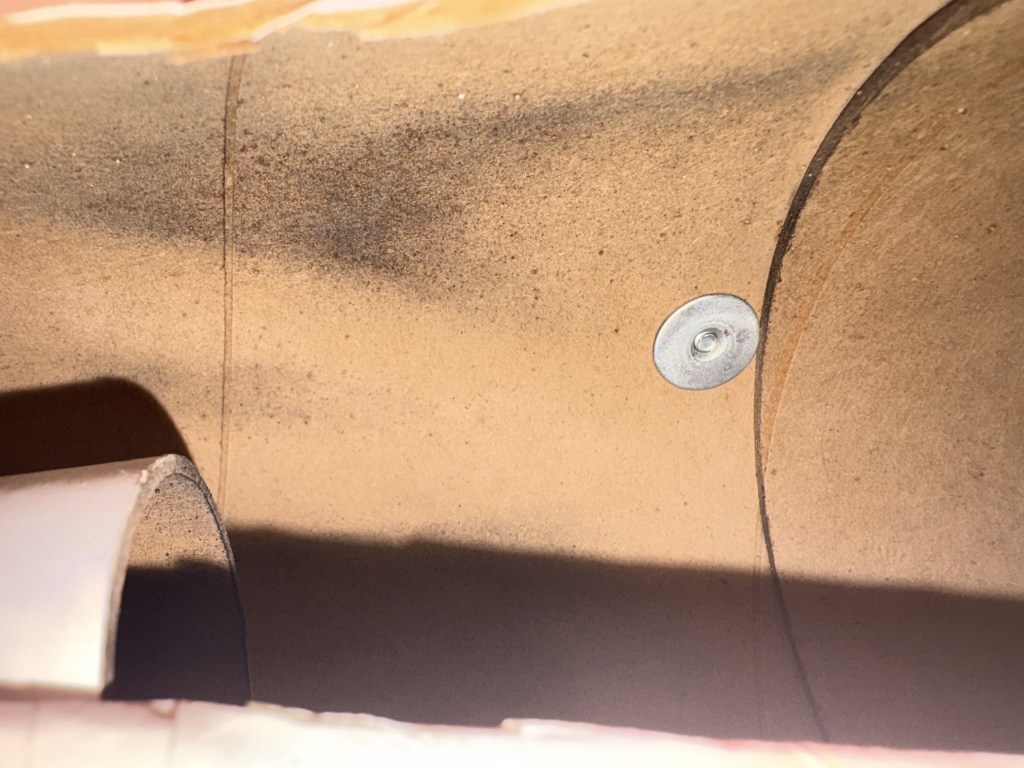
Next you can see some of the internal damage to the inside of the body tube. The body tube is the main cylindrical section of the rocket. Notice the difference in burn marks compared to Pleiades 1 having no noticeable burns.
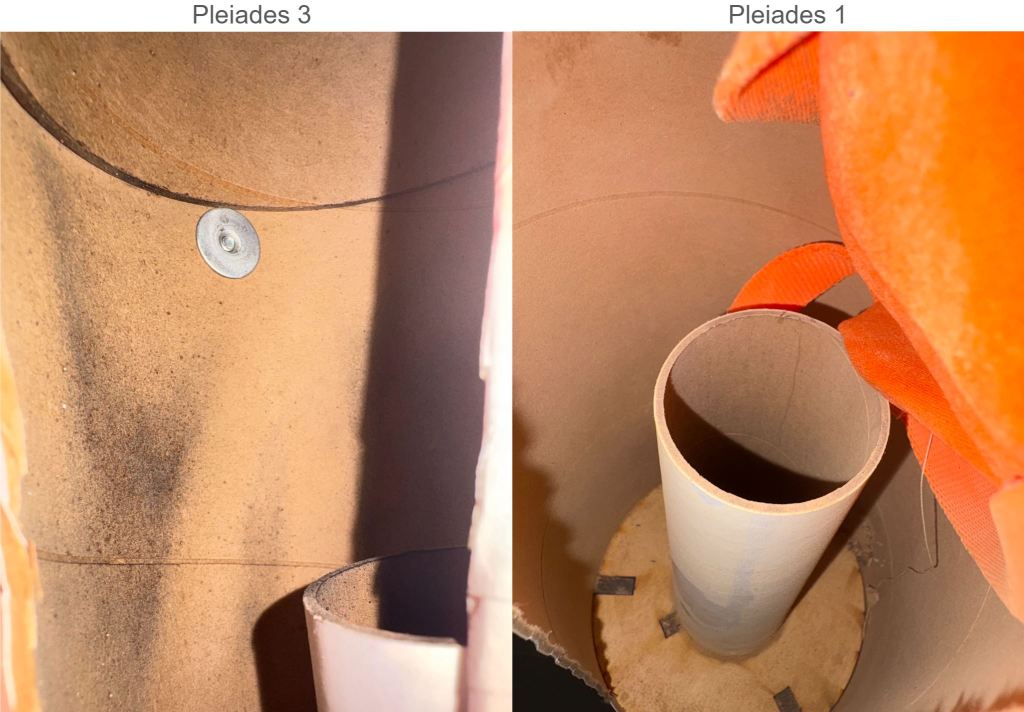
Though we did not cut open the other rockets used in Pleiades 1, their chute protectors showed no such damage, so let us assume that these burn marks to the inside of the body tube is not normal.
How Does the Ejection System Work?
To continue the investigation, let’s learn a bit more about what we are looking at and where each of those pictures were taken within the rocket. Looking at the figure below, this is a simplified diagram of the lower interior of a Zephyr rocket before launch.
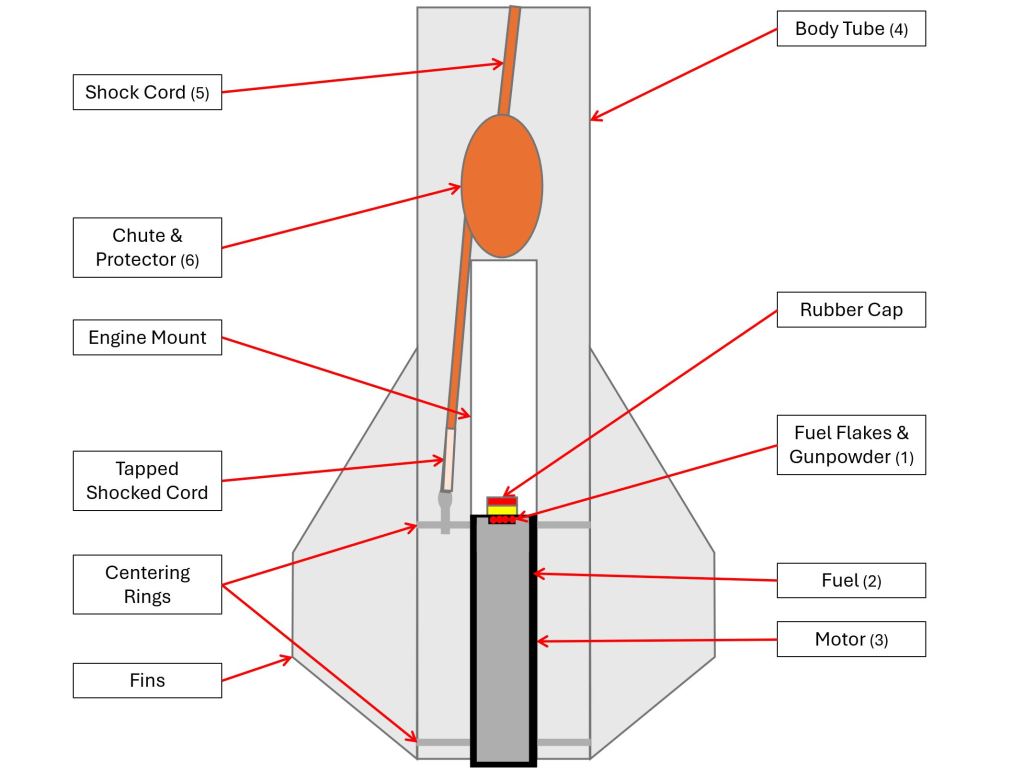
For the sake of this story, pay close attention to where the fuel flakes and gunpowder(1) are, on top of the rocket’s fuel(2) and motor(3). For context, the single use motors like the H219-14A we used on this launch use a black powder charge to cause a small explosion that fires up into the body tube(4). This force travels up and pushes the nose cone up and out of the body tube. Attached to the bottom of the nose cone are two attached components:
- Shock Cord(5): A bright orange nylon cord that connected the nose cone and the rest of the rocket together.
- Parachute(6): The parachute is attached through several small strands.
This black powder charge sits on top of the motor, not directly on top of the fuel but a flammable delay as seen here:
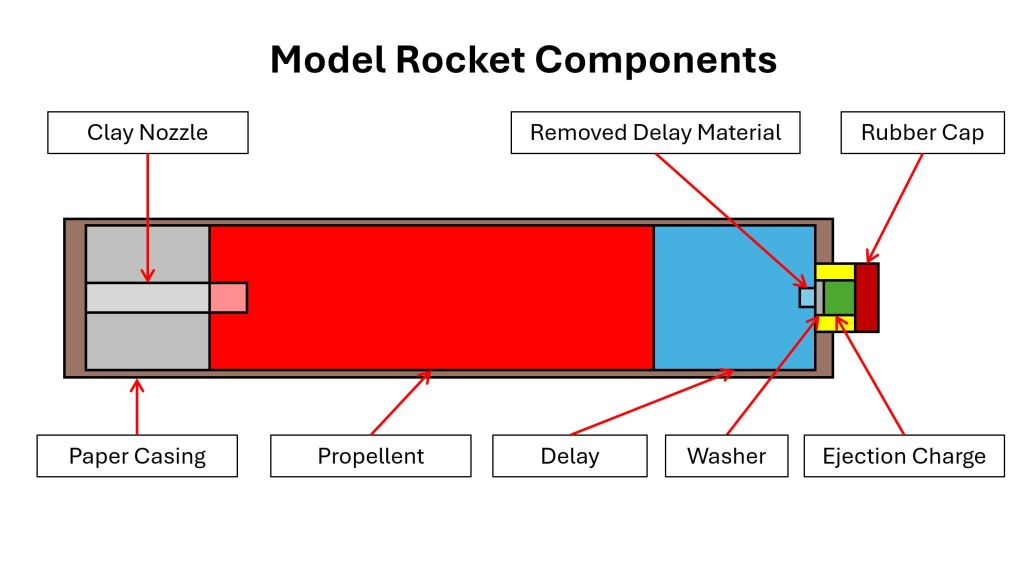
To make sure the gunpowder (ejection charge) does not move around and out of position during the violent shaking of a rocket launch, a spacer and a red rubber cap is used to plug the open end, seen in the diagram above as the gray retainer. To change the delay, you can drill away a bit of the delay material. For Pleiades 1, we used a hand drilling tool with spacers to adjust the delay time from the default 14 seconds after liftoff to 10 seconds. This is done to lower the stresses put onto the rocket as the parachute is deployed. When the ejection charge ignites closer to the apogee of the flight (highest point of the flight), the rocket has a lower downward velocity, and the parachute does not exert as much counteracting force on the rocket. The closer the ejection charge ignites after the rocket reaches the apogee, the lower the forces.
The Key Difference Between Pleiades 1 and 3
Here lies the key hint. Between Pleiades 1 and 3, we had misplaced that drill bit and did not realize this till launch day. We thought that would be fine since we could use a screwdriver and eyeball the material to roughly what we saw a few months prior. This is a far less accurate but legit way to shorten the delay. However, unlike Pleiades 1, we did not clear out the shaved material.
What Caused the Fire?
Those familiar with solid propellants know that air pockets and irregular packing can cause localized explosions or unusually rapid burning. Our team has been familiar with this long before we even formed our team. You can see this in the video below where we had purposely mixed solid state fuel to be full of air pockets. This caused several small explosions where the motor was able to keep burning but the final pocket was large enough to detonate the rest of the fuel. See if you can pick up on the several smaller explosions in the video.
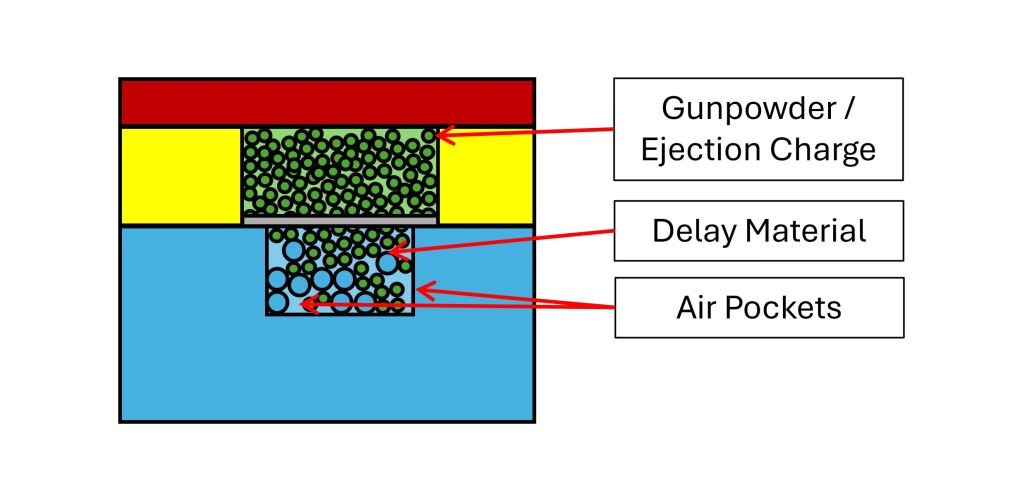
Now that we know how these bubbles of air affect fuel burn in solid state motors, let’s now look at a zoomed in version to the area around the ejection charge. As seen in the image below, air pockets were formed due to the large flakes of delay material being left behind and the smaller gunpowder particles unable to fill these voids creating those pesky air pockets.
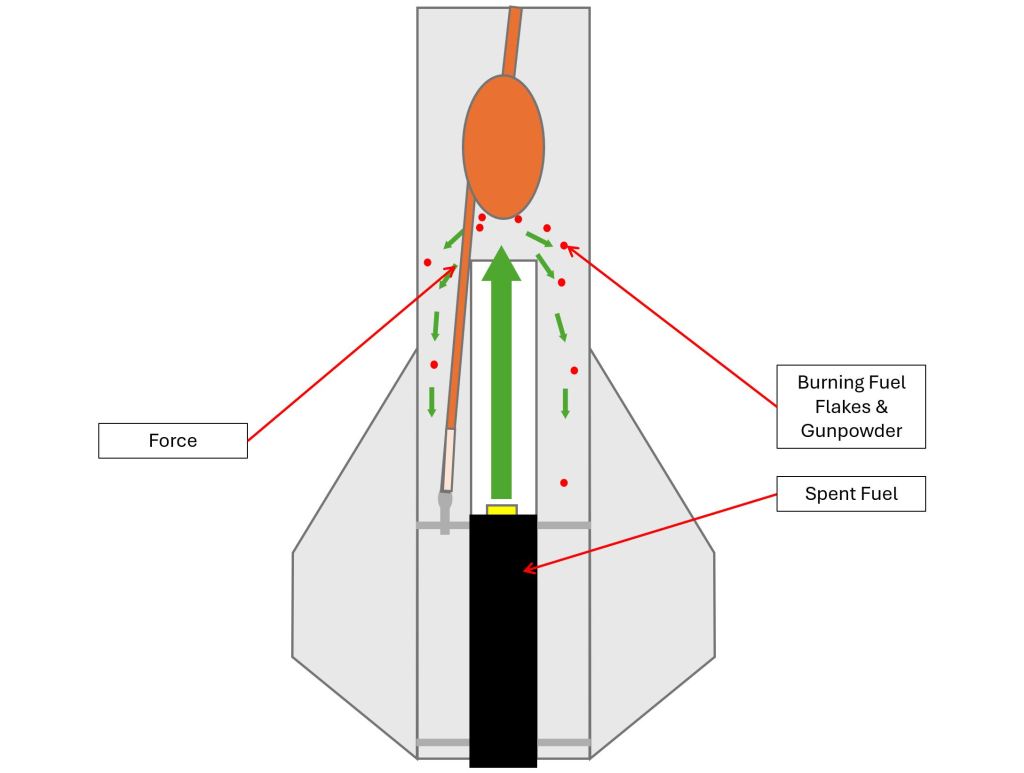
In the milliseconds after the gunpowder was lit, we can look at the image below showing the lower half of the rocket. The green arrows show the force of this explosion. Luckily enough, the explosion appeared mostly normal, after all the nose cone was forced out and the parachute did deploy. However, as we can see in this diagram, with these small pockets of air, that explosion did not burn as efficiently as normal. This means that unburned flakes of flammable material were likely fired up the engine mount into the parachute protector and around the body tube and caused the damage seen in earlier pictures.
How Do We Know What Started the Fire?
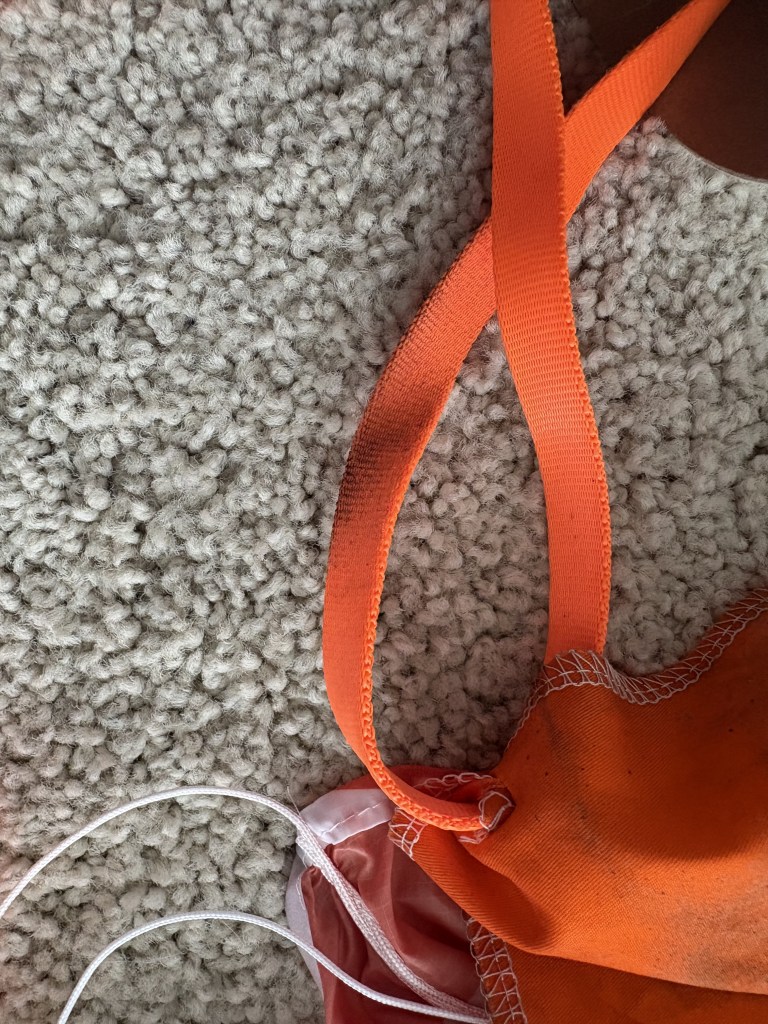
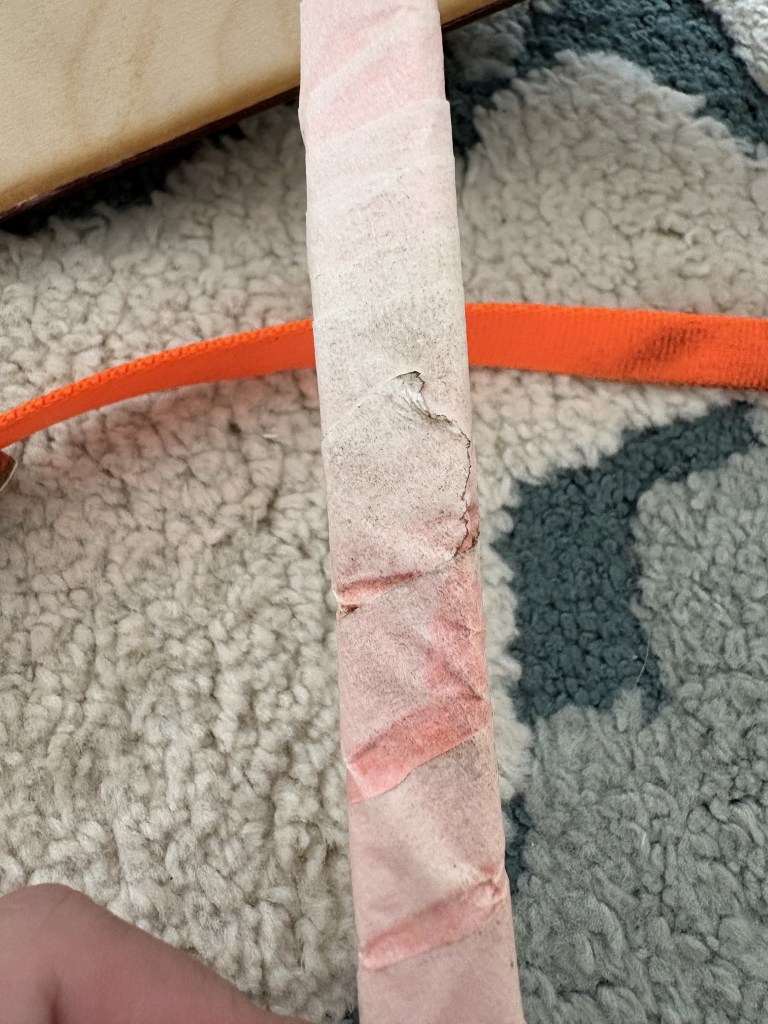
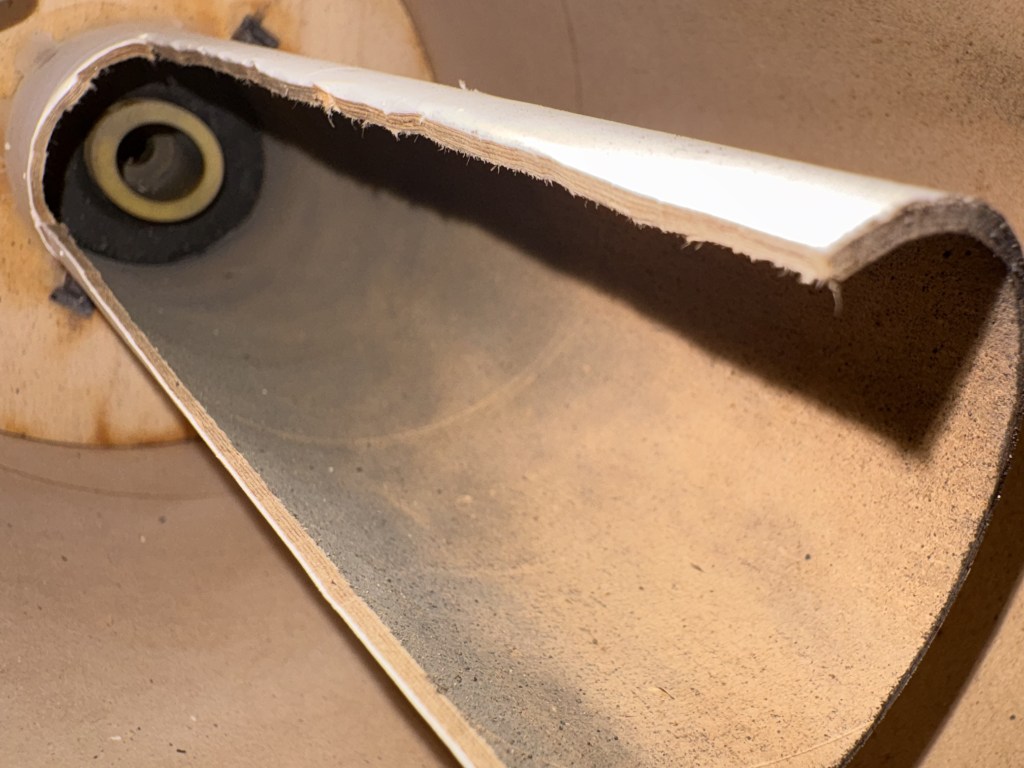
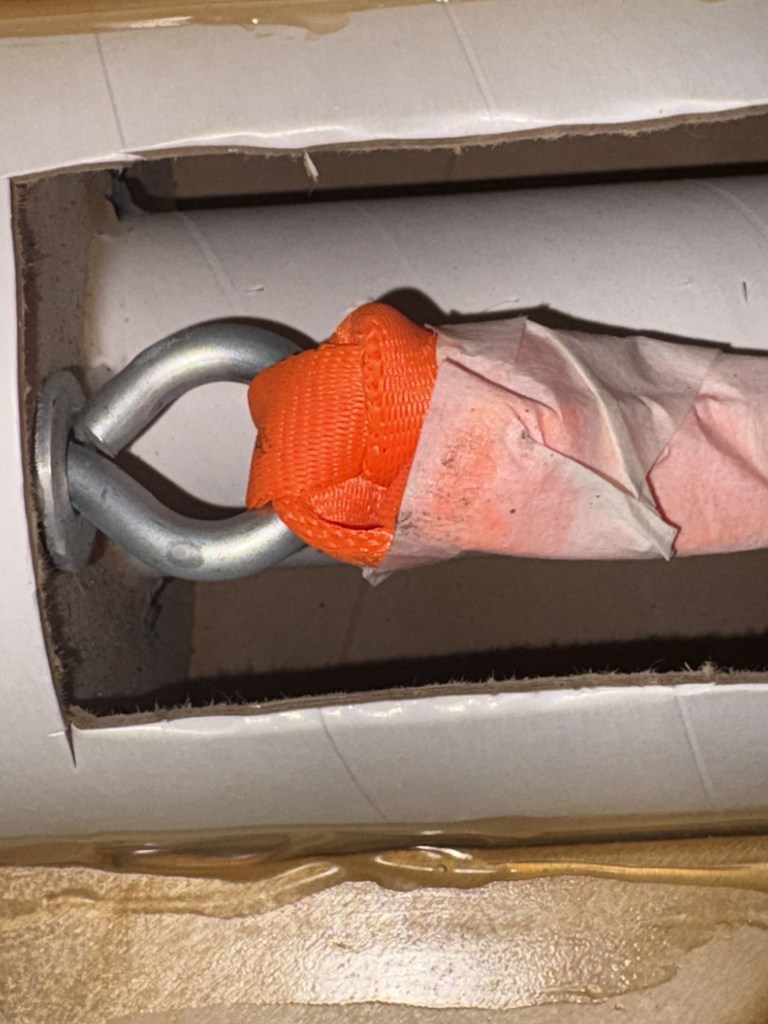
You may be rightfully curious about what evidence of these unburned materials throughout the lower half of the rocket looks like. After inspecting the rocket, we found several burned and scorched areas that lined up with the path the ejection charge would have taken as it fired upward. The damage appears to have reached the parachute protector, the inside of the body tube, the shock cord, and the engine mount.
In the following three diagrams, you can see where these images were taken within the rocket. The damaged sections are highlighted in red, making it easier to compare the locations of the burns with the path that hot, unburned material may have traveled. Each diagram also includes a note pointing out the most important evidence in that section.
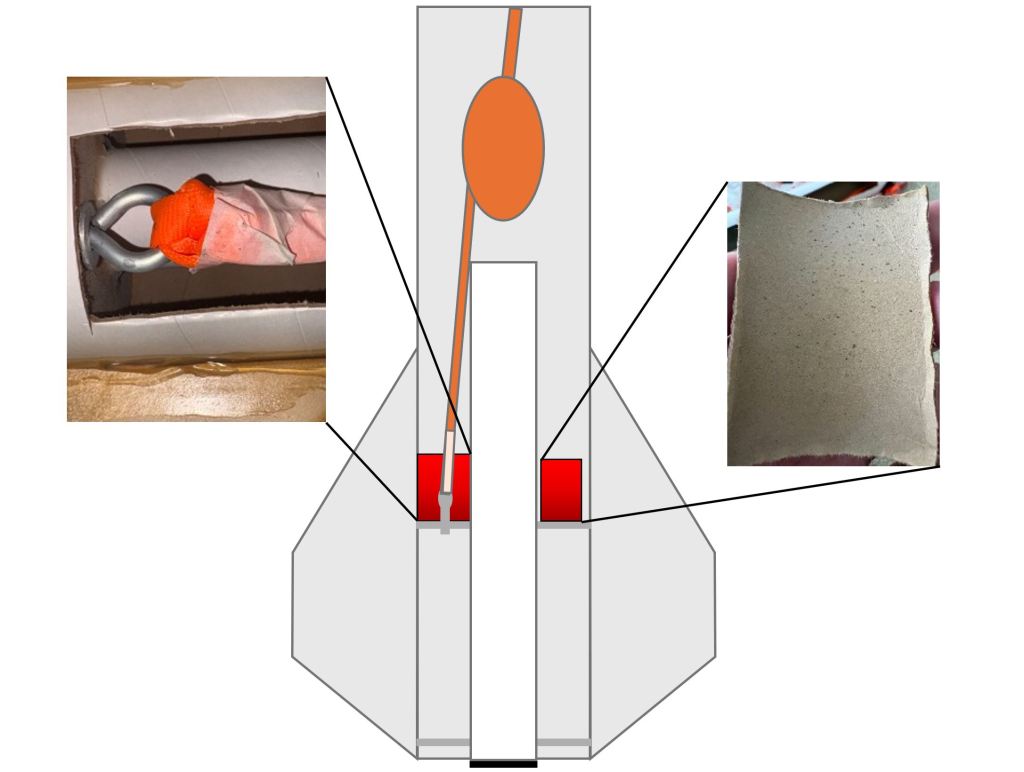
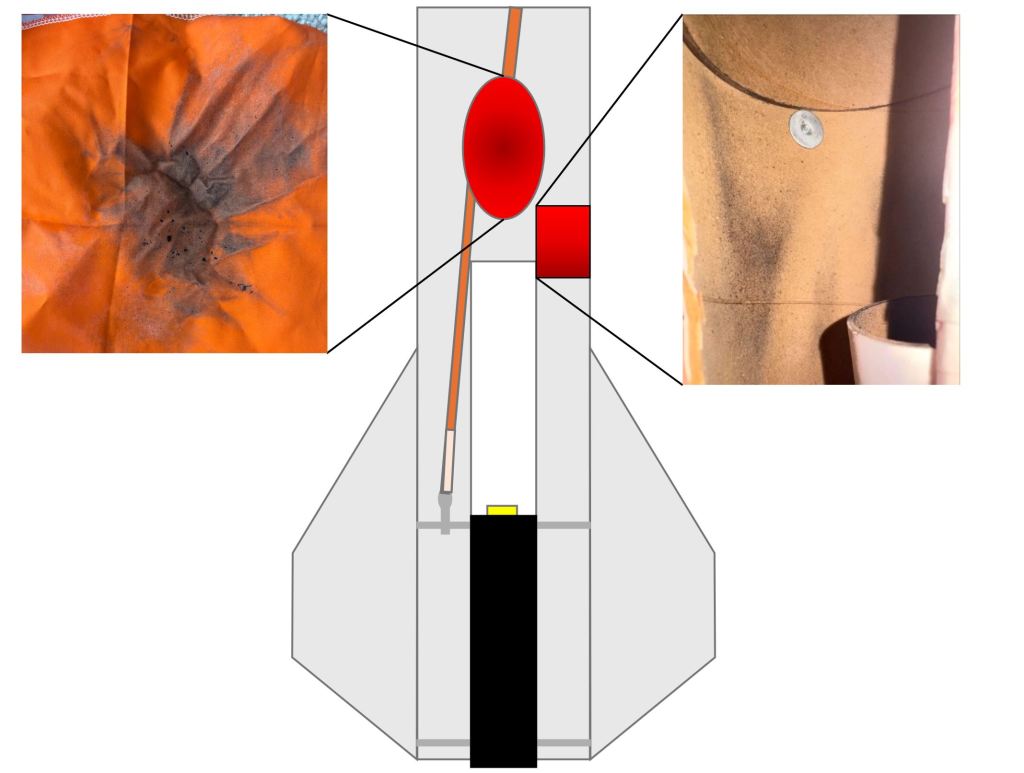
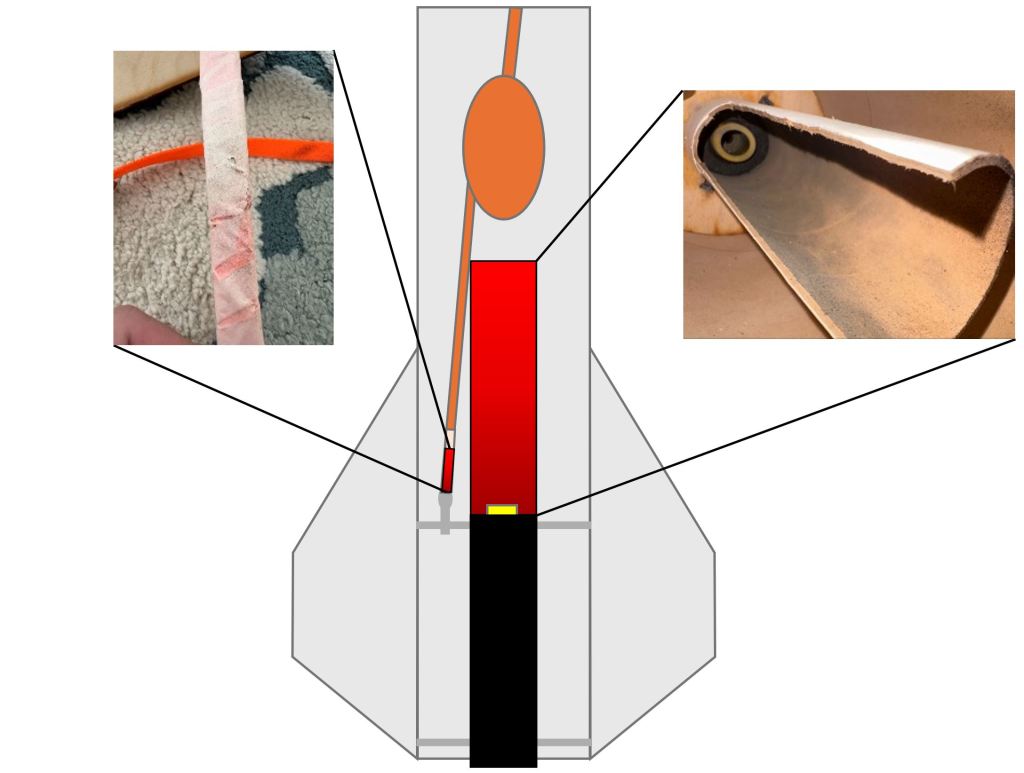
Here you can see more of these images in greater detail:
Evidence Against the Ejection Charge
With this evidence for a fire being caused due to the loose delay material lit by the ignition charge, we would like to point out potential evidence to the contrary. In the image here you can see a trail of smoke following the rocket while ascending.
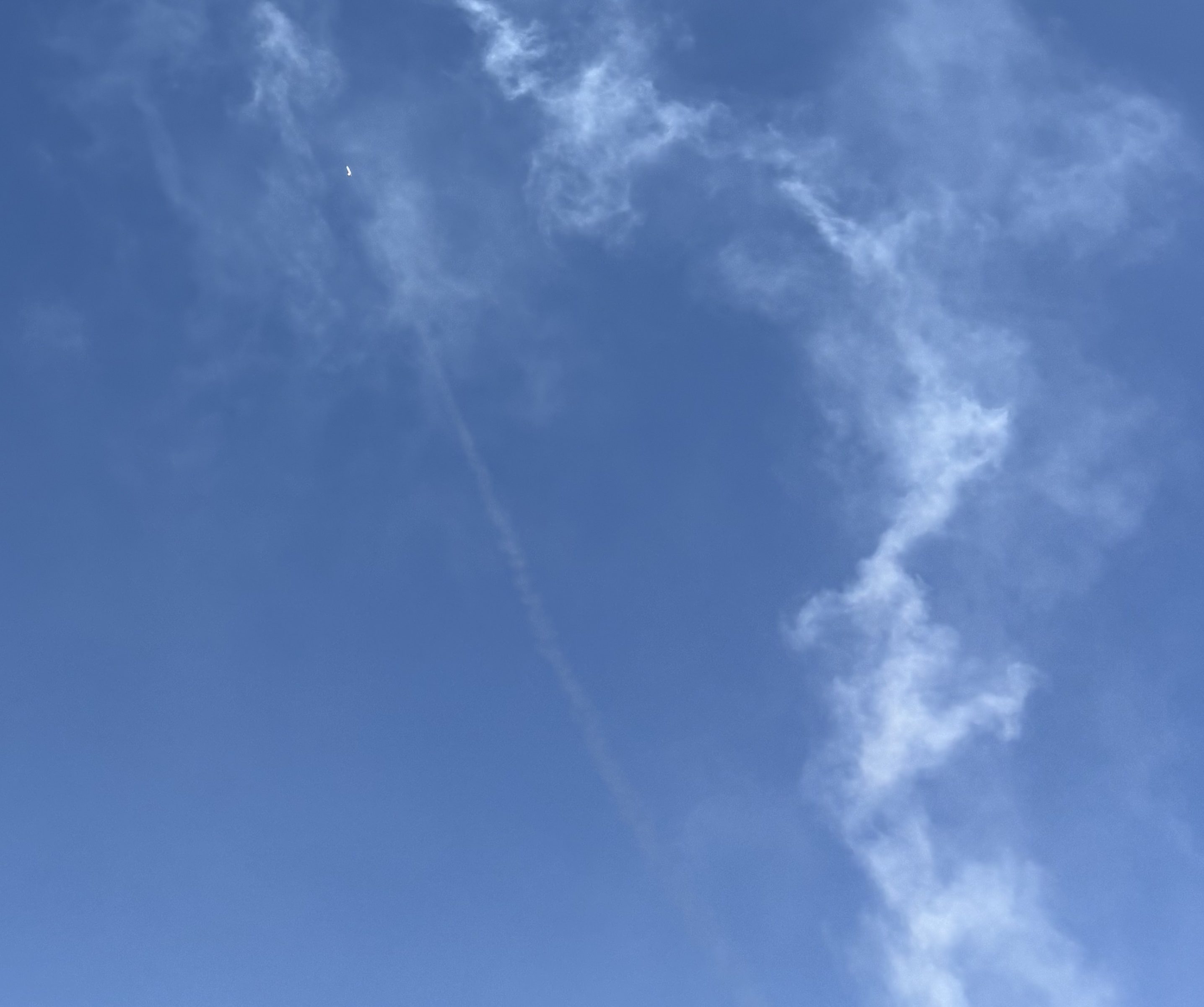
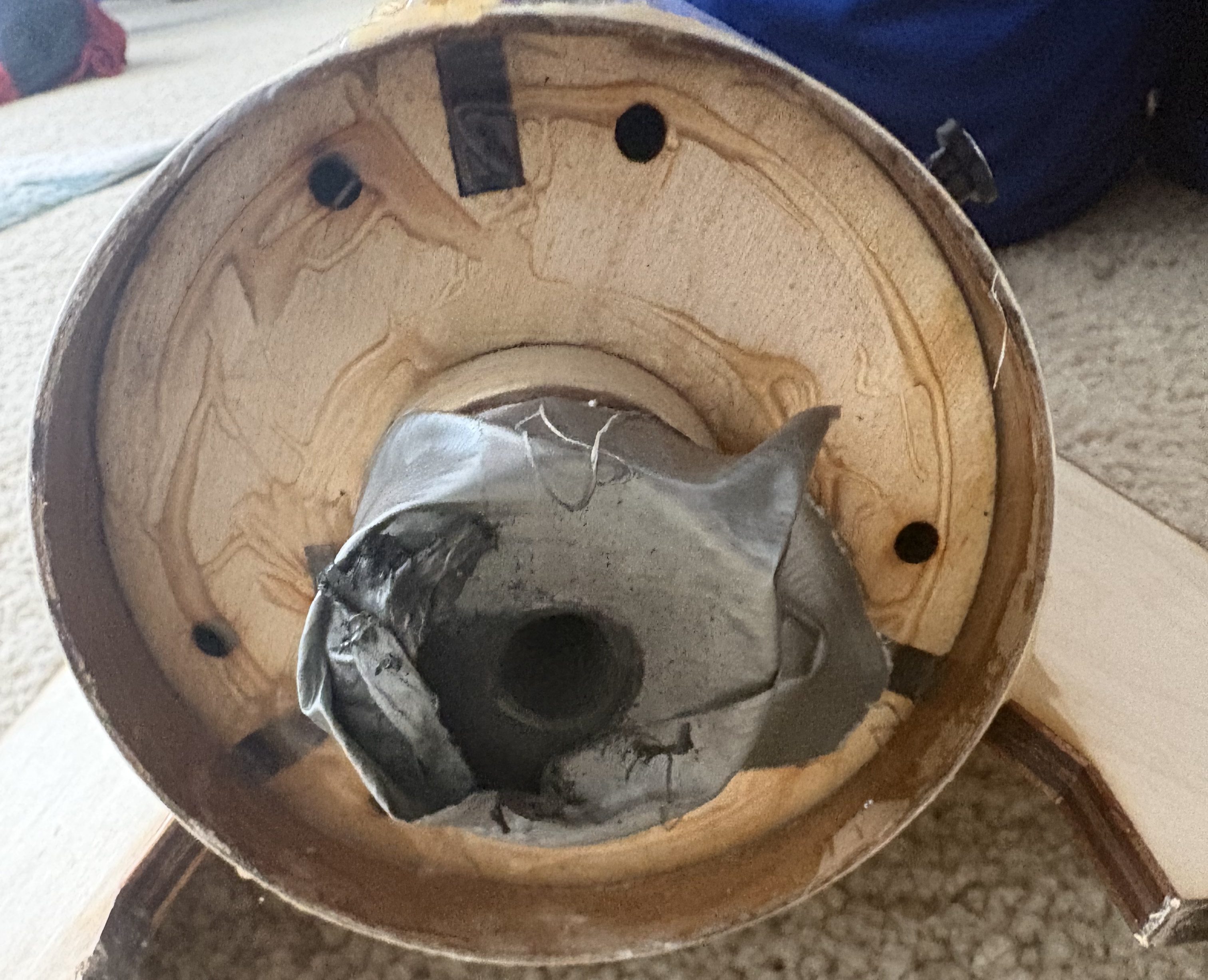
After inspecting the rocket for damage, there didn’t seem to be damage anywhere that could lead to smoke like this. The only possible source of this smoke we could find was the burnt tape that taped the igniters to the inside of the motor as seen here:
What the Camera Shows After Deployment
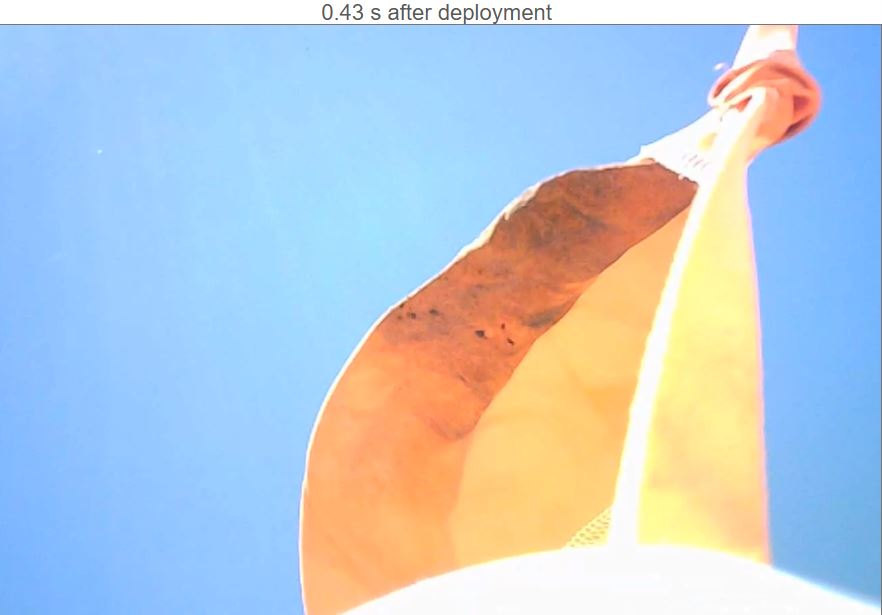
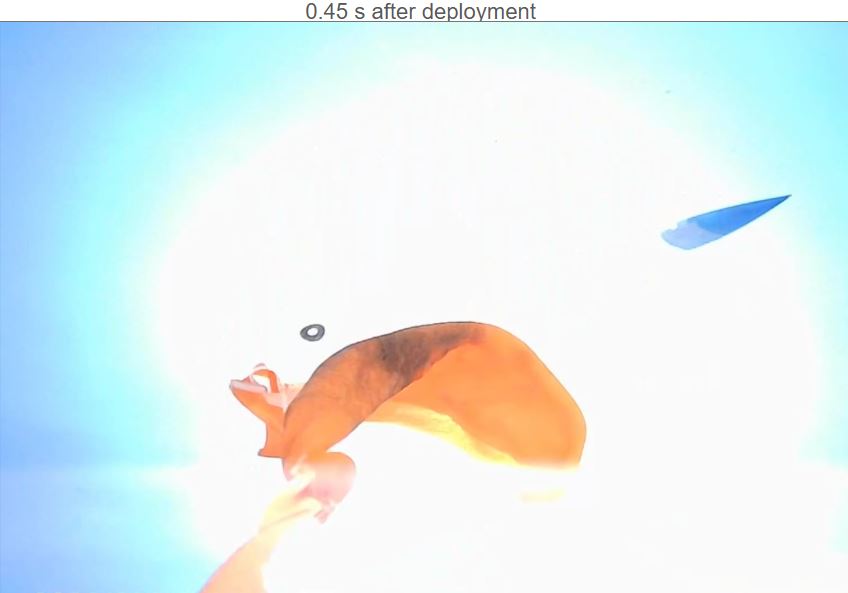
The next line of evidence comes from the USB camera looking up towards the nose cone. Though I should state that it does not necessarily prove the source of the fire, only that the burns were already visible less than a second after the parachute was deployed.
What Can We Conclude?
The evidence suggests that unburned particles from the modified ejection charge were expelled into the lower section of the rocket. Those particles likely struck the parachute protector and the inside of the body tube while still hot, causing the burns evident throughout the rocket. The smoke seen during ascent may have also come from tape that was used to hold the igniter wires in the motor.
However, this remains a leading hypothesis rather than a confirmed conclusion. The camera footage shows that the burns were already present immediately after parachute deployment, but it cannot by itself prove exactly where the fire began. To test this explanation, we hope to recreate the same conditions during a future launch while carefully documenting the ejection charge, delay modification, igniter tape, and interior of the rocket.
The clearest lesson is that any material removed while modifying the motor delay must be completely cleaned out before the rocket is launched. If you see another possible explanation, or think there is a test we should conduct, let us know in the comments! What evidence did we miss? Hope to see you all after the next launch!




Leave a Reply