
Thomas P.
In Andy Weir’s The Martian, a particularly astute orbital dynamics expert is lauded for his skill with the line, “Rich Purnell is a steely-eyed missile man.” Weir’s love for NASA history is on full display with this line, as it is a phrase that has long been used at NASA and among rocketeers elsewhere to describe a stalwart and steady character. I’ve always found it to have a particular allure. It suggests to me boldness, competence, and an ability to get the job done even through steep adversity. When my rocketry club opted to attempt a level one high-power rocketry certification, I wondered if perhaps I too could become a steely-eyed missile man.
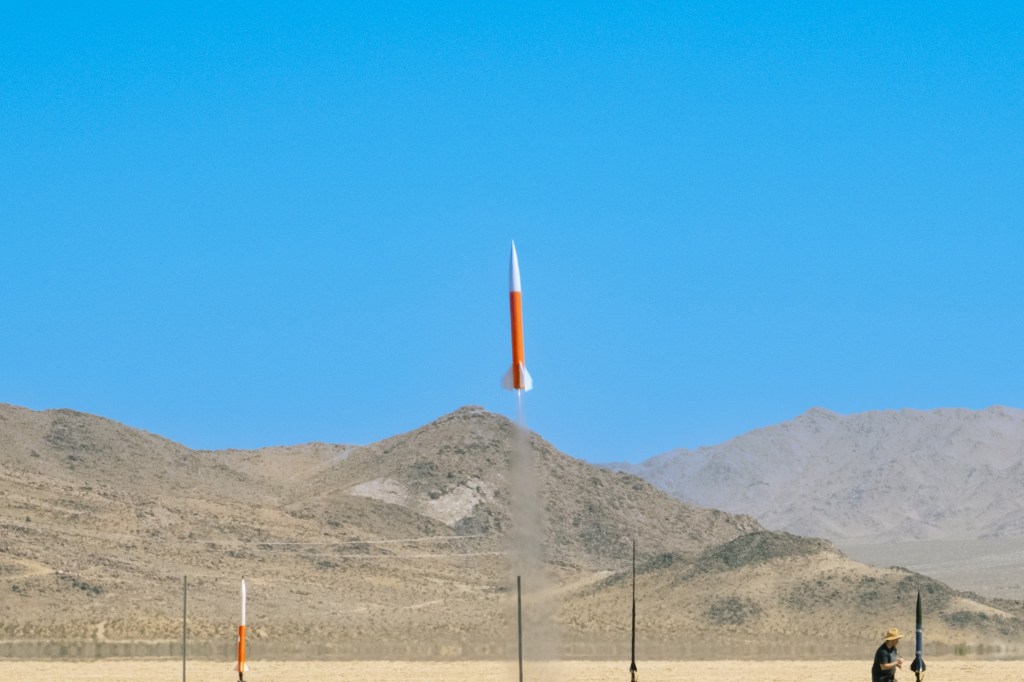
My experience in rocketry at that time was limited and almost entirely academic, so I had much to learn. Each of us would need to build our own rockets, find motors for them, and then launch successfully under the watchful eyes of National Association of Rocketry (NAR) inspectors. The building proved the easy part. I constructed a rocket of my own, and painted it a two-tone orange and white pattern. What proved more harrowing was actually getting that rocket into the air.
The first trouble emerged when our team member who was responsible for supplying us with the engines required for our rockets was forced to back out from the launch. This created an obvious problem for the rest of us, as no matter how well-constructed, doughty, and beautiful our vehicles were, they would be useless without motors to propel them. So, a new plan had to be devised. I got in contact with our team mate and we devised a quick handoff. As I am based less than two hundred miles away from his own home, I would have to be the one to take the motors to the launch site. The hand-off occurred in a gas station parking lot with all the grace of a drug deal, but with the job done, we were back on track to meet our certification deadline.
I made the drive to Victorville several days later, where I was met by Gary and Sarah as well as Gary’s brother, Marvin who would serve as our photographer. Sarah had been kind enough to spring for a hotel for the lot of us, so, as night fell, we got to parade our freshly-painted rockets through the lobby. Gary and Sarah were mildly concerned that the missiles would get us thrown out, but having worked in hotels for a time myself, I assured them that a gaggle of missile-wielding out-of-towners like ourselves were surely far from the strangest thing the staff had ever seen come rambling through their lobby. Sure enough, the desk agent offered us no more than a passing glance as we moved our arsenal up to our rooms where they were clustered together in a little copse in the corner as we slept.
The next morning, we rose early and made preparations to depart for the launch site. It was here that I began to have doubts about our prospects far in excess of my passing fancies I may have had previously. We had never assembled a rocket engine before. An inaugural rocket launch was not something one could exactly practice. I had visions in my head of inspectors watching us fumble with pieces and components with no clue as to how to fit them together. We were assured there were instructions inside the packaging, but what if that was a lie? What if they were too esoteric to be understood and followed while out in the windswept desert, harried by watching eyes? My nerves were thoroughly frayed by the time our rockets were loaded back into our vehicles and made ready to leave, but we were fully committed by that point. There would be no turning back. That very day, we would either soar to victory or plummet to the depths of defeat one way or another.
Gary sent me the address for the launch site, roughly 40 minutes away from the hotel, and we set off having eaten only a light breakfast. And that anxiety was still churning up my gut. The drive came as a relief. I’ve always been most relaxed behind the wheel, and I had never seen the countryside around Victorville.
I ended up seeing more of it than I bargained for.
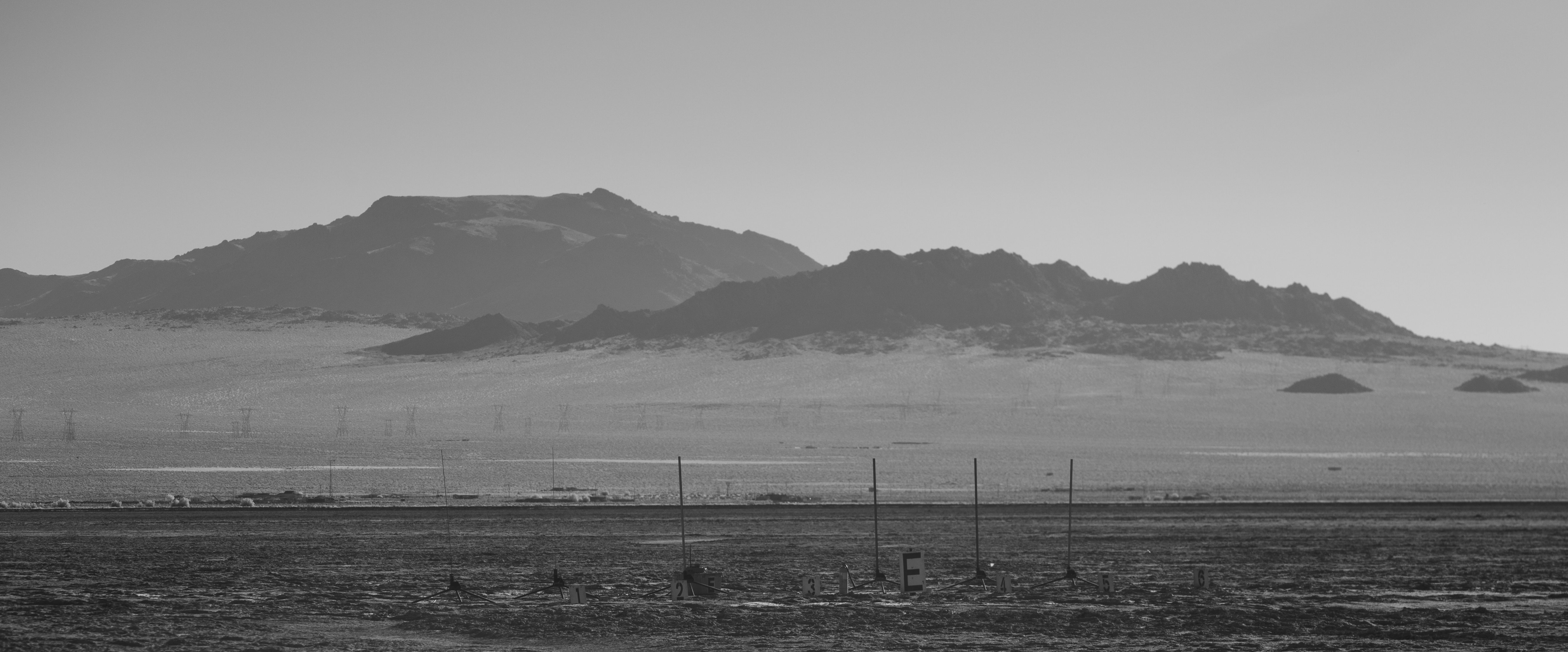
I drove for longer than 40 minutes, following a route plotted by Google Maps which led me out into a sparsely-populated region of mostly open desert. The paved road under my tires turned to packed earth and then to soft sand fine as powder. Well, surely the launch site is in an isolated locale. It wouldn’t be firing off rockets right next to someone’s house. I continued to press until I could feel my wheels starting to slip. I activated the four-wheel-drive system and trundled up a low rise which afforded me a wide view of the surrounding valley: nothing but empty desert and isolated homes for miles.
I was disabused of the notion I was still on course in an instant and dialed Gary’s number, relieved to find that I still had service. “I’m trying to reach the address you sent me, but brother, I am four-wheeling out here,” I told him. He confirmed that they had needed to drive down a heavily-rutted dirt track to reach the site, but nothing like what I was navigating. He and the rest of our companions had already made it to the launch site, so he was able to drop a pin on their location and send it over to me. I had strayed a few miles too far and wound up backtracking to find the correct path. The wispy exhaust trails left by several fresh launches marked the site even from afar.
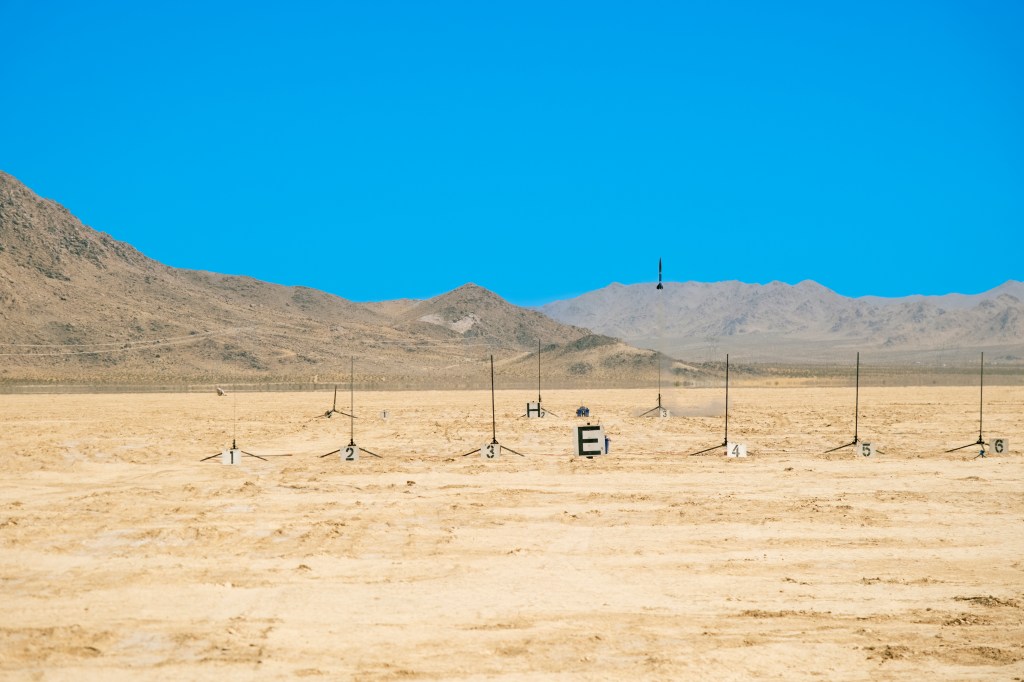
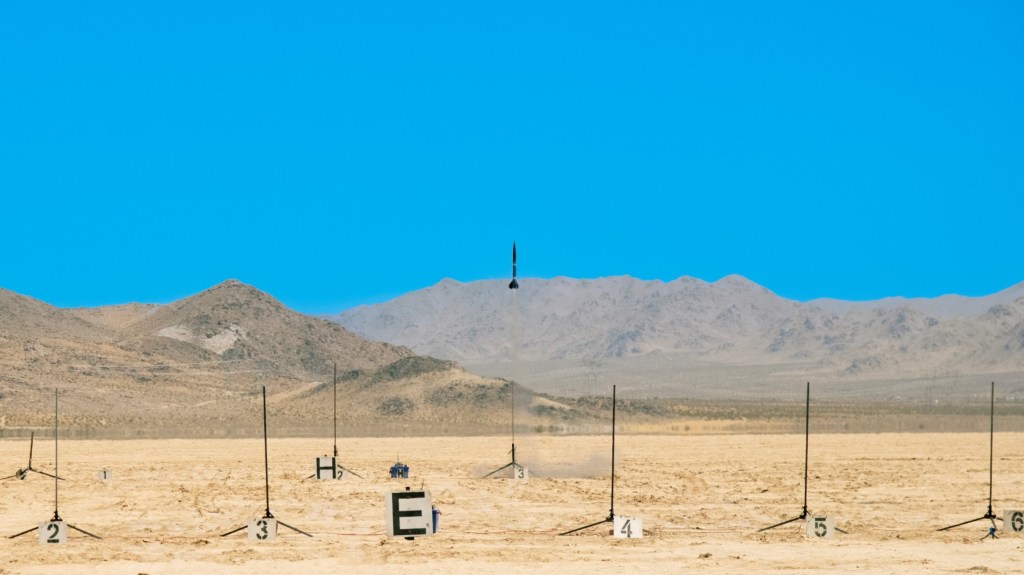
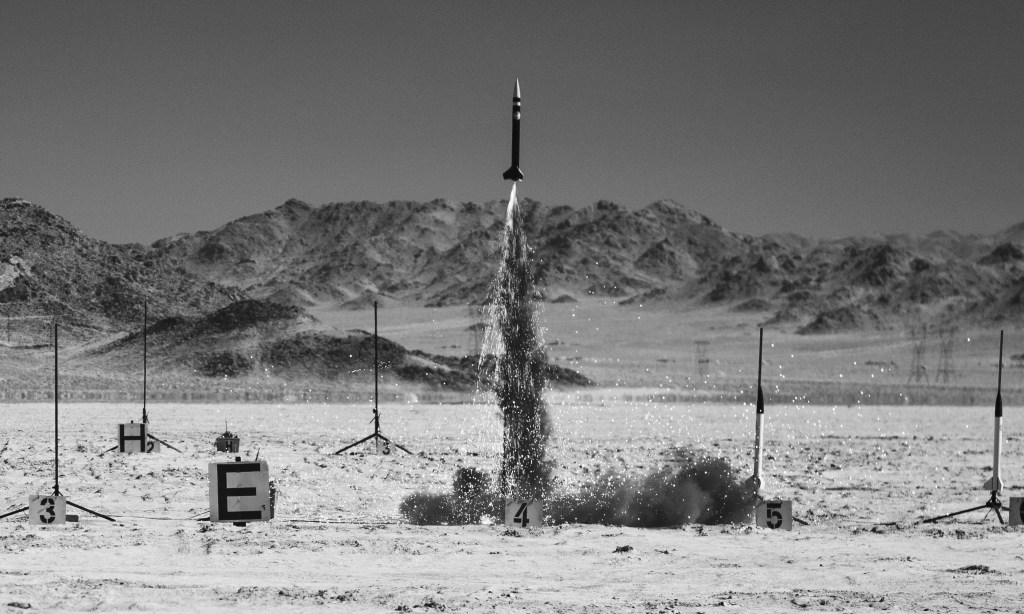
The site in question was a wide, dry lakebed, acres upon acres of barren, lifeless dirt. An ad hoc parking area had been established at the end of the pocked road. Off to the left as I approached, a collection of tents broke the desert landscape. A moat of cracked earth separated the tents from the launch pads. A far cry from the impressive launch gantries at Cape Kennedy or Baikonur, these were small, minimalistic affairs, tripods with gently-angled rails pointing skyward. Already, a number of larger rockets were assembled there, lighting off one by one, as a smaller launch complex ahead of them prepared to fire off model rockets.
I pulled my car into the lot and located my companions. My first stop was the registration table, where I presented my NAR membership card and confirmed that it was my intent to try for a high-power rocketry certification. I was told that I needed to present my paperwork to Neil, the certification representative who would handle all such attempts at this event.
So this was the man who would decide our fate.
With my companions at my side, we collected our rockets, packed our recovery systems, and checked over each and every piece before we struck out to find Neil. The man we found was not the stern commissar I had feared, but rather a very friendly and approachable man who was more than happy to look over our paperwork and then perform a quick safety inspection on our vehicles. He was most interested in ensuring that all of the fins and components were securely attached to the rocket as well as the fit of the nosecone. It’s critical that the nose fits snugly, but not so tightly that it won’t be able to jettison to release the recovery chute.
With all three of our rockets having passed the safety inspection, we came to the challenge I had dreaded the most: assembly and installation of our motors. Surely this is where we would fail. But again, I was pleasantly surprised to find Neil entirely helpful. Apparently, it was not uncommon for those seeking a high-power cert to arrive with no experience assembling motors. In hindsight, it stands to reason. As stated before, launching a high-powered rocket isn’t really something one can practice for.
We set up a small work area just behind the row of tents and set to work breaking open our motors. Instructions included, we followed them to the letter, and were ready to install in just a short time. Following the instructions, we used masking tape to secure the engines in place, but Neil was quick to suggest that we instead use the masking tape to wrap the body of the motor so as to secure it via friction. When the motor on my rocket required Gary to hold the vehicle while I pushed the motor into place, Neil was satisfied that it would remain secure.
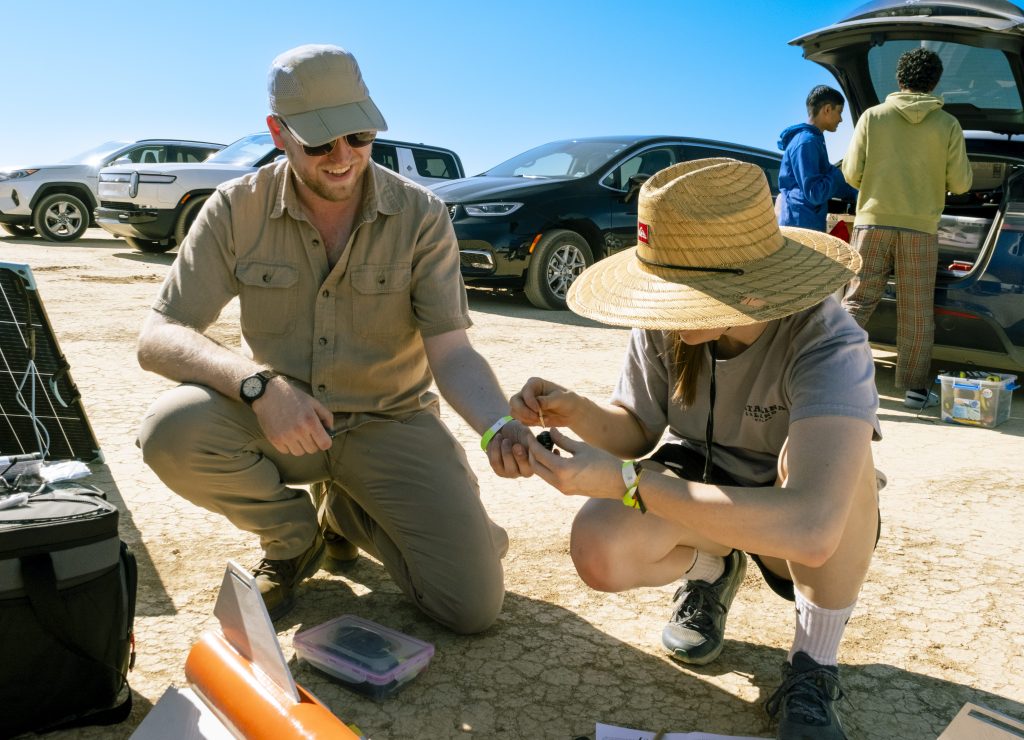
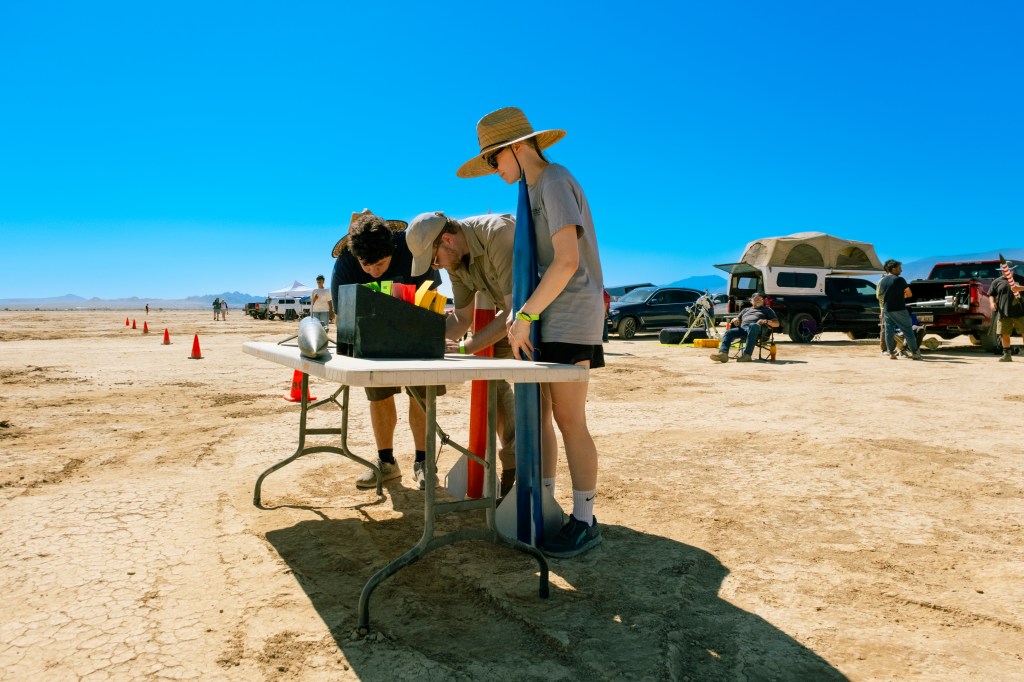
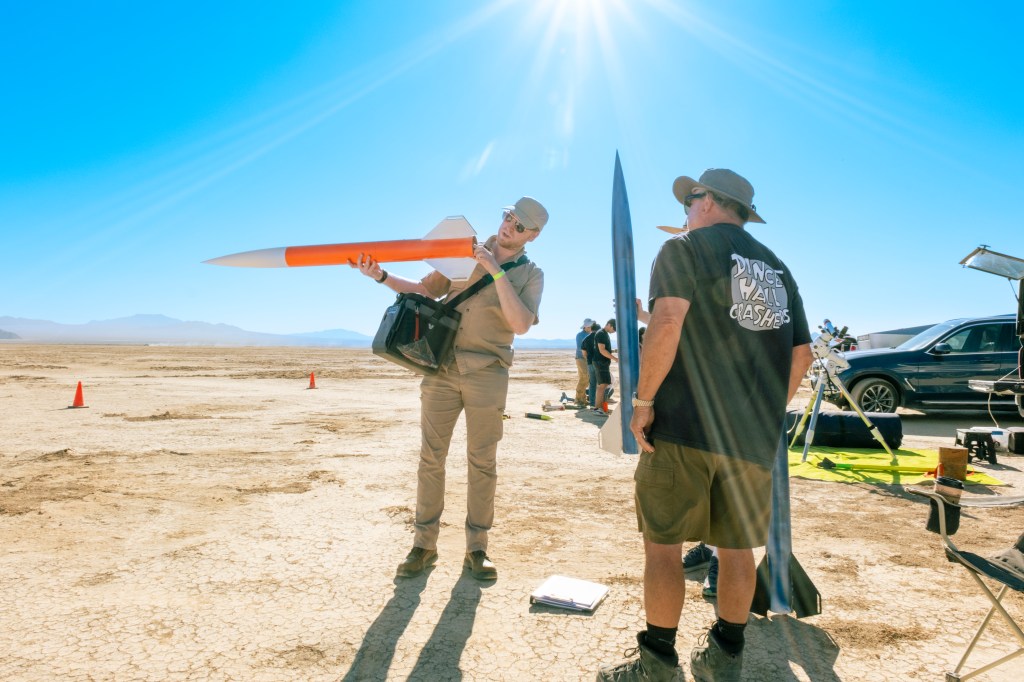
Engines installed, we were ready to launch. We each selected a red launch ticket, filled out the requisite information, and handed it over to the launch coordinator. All we had to do then was wait until we were assigned launch pads and cleared to move down-range to place our vehicles on the pad.
We stood in line behind the launch complex as the next fuselage of missiles took flight. Little model rockets, far less powerful (though no less artful) than our own, took off with whizzing cries like an angry wasp while the throaty roar of high-powered engines lifted the truly massive rockets beyond. One vehicle, a tall, thin, two-stage affair, suffered a catastrophic failure on the pad and broke in half, spewing sparks and flames as the entire gantry tipped over and writhed as the motors burnt themselves out. Another one rose perhaps ten feet off from the gantry before an excess of pressure inside the rocket saw it burst with a ringing crack. Shreds of parachute and rocket body went raining over the launch site as the discarded nosecone cartwheeled a good distance out before coming to rest back down on the earth.
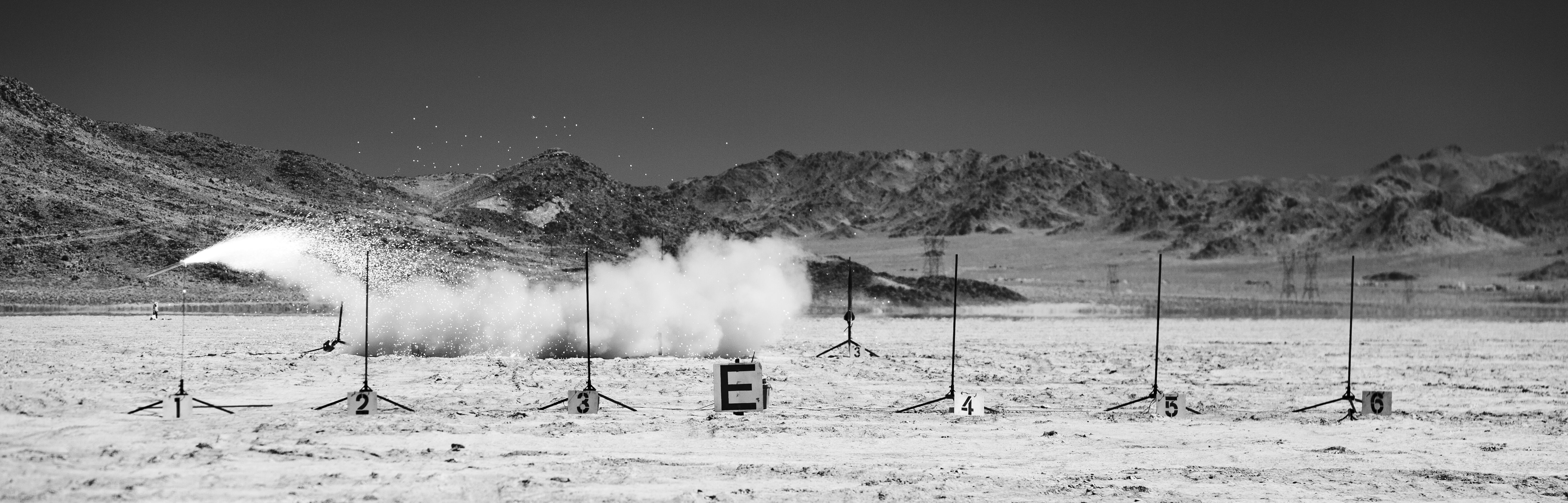
That got me to thinking, and I’m sure it must have had a similar effect on my fellows. There was so much that could go wrong. What if my rocket exploded before taking flight? What if the electronics failed and the engine didn’t light? What if the chute didn’t deploy and the whole thing came crashing down like Icarus? A veritable maelstrom of grim fantasies marched circles in my head, and they didn’t abate one bit as we were called forward and assigned launch pads.
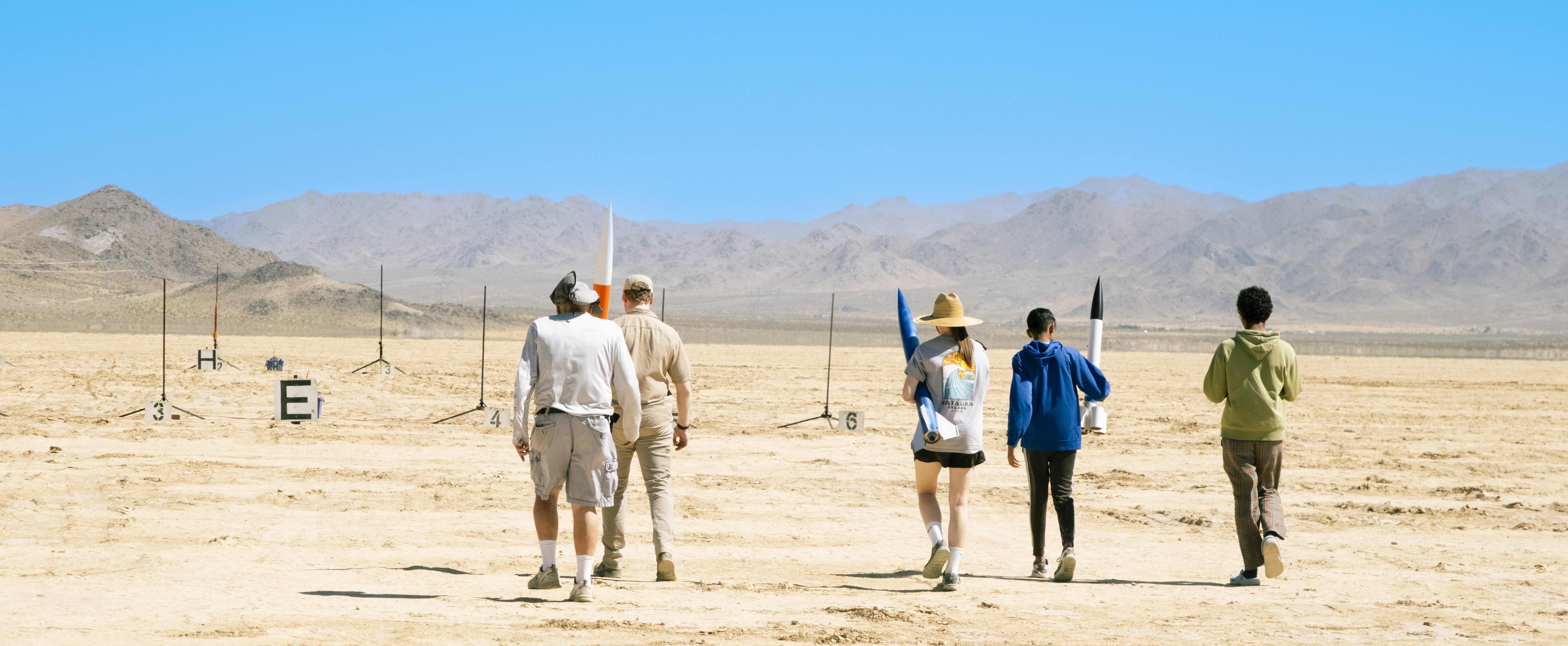
Alongside Sarah, I trod out to the launch complex. It was an eerie feeling after seeing so much fire and devastation wash over that stretch of dirt so recently. A few other rockets were already in place there. What if one of them suffered a malfunction and blew up while we were down there? I’ll admit the thought was something of a thrill, but I forced myself to focus on the instructions Neil had given me before heading down-range. I mounted my rocket to the gantry and inserted the firing mechanism after stripping an inch or so of insulation from the two wires at the end. Those got spliced into the launch system, and then a little extra masking tape secured the wires to the edge of the motor. A small box lay a few meters away, the central control point for all the firing mechanisms on the line. The warden there barked at me to “press the happy button!” and when I did, the box chirruped at me. He informed me that meant the box was happy, and thus I could return to the observation area.
Time crept by as the rest of my fellow rocketeers got their missiles situated and ready to go. I did my best to keep my eyes steely as the moments slipped past. Then came the announcement, “E3, Thomas [REDACTED] going for level one with Neil. Apogee Zephyr on an H219 in 5, 4, 3, 2, 1…”
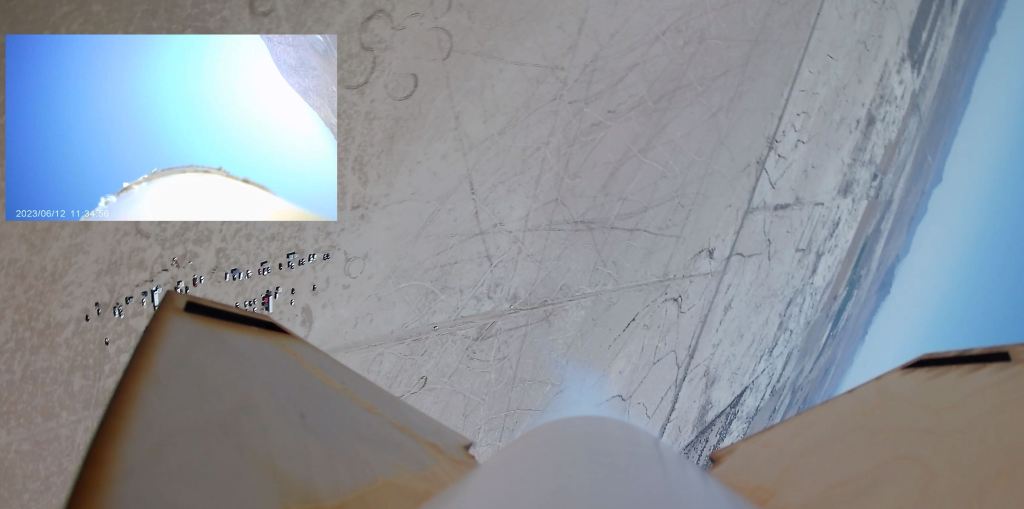
The countdown was no dramatic affair like you see on television or even in old NASA footage. The announcer raced through it as though he were short of deadline, but as soon as “one” was spoken, I was delighted to hear the hissing scream of the engine as my rocket leapt skyward. It banked left as it launched, but didn’t heel over to come crashing back down. The engine burned for only a couple of seconds before it turned itself over to Isaac Newton’s capable hands and adopted a ballistic trajectory before the internal charge fired and ejected the nose cone. This was the most stressful moment of the entire launch. Would the chute deploy? If it didn’t, I knew that would constitute an automatic failure.
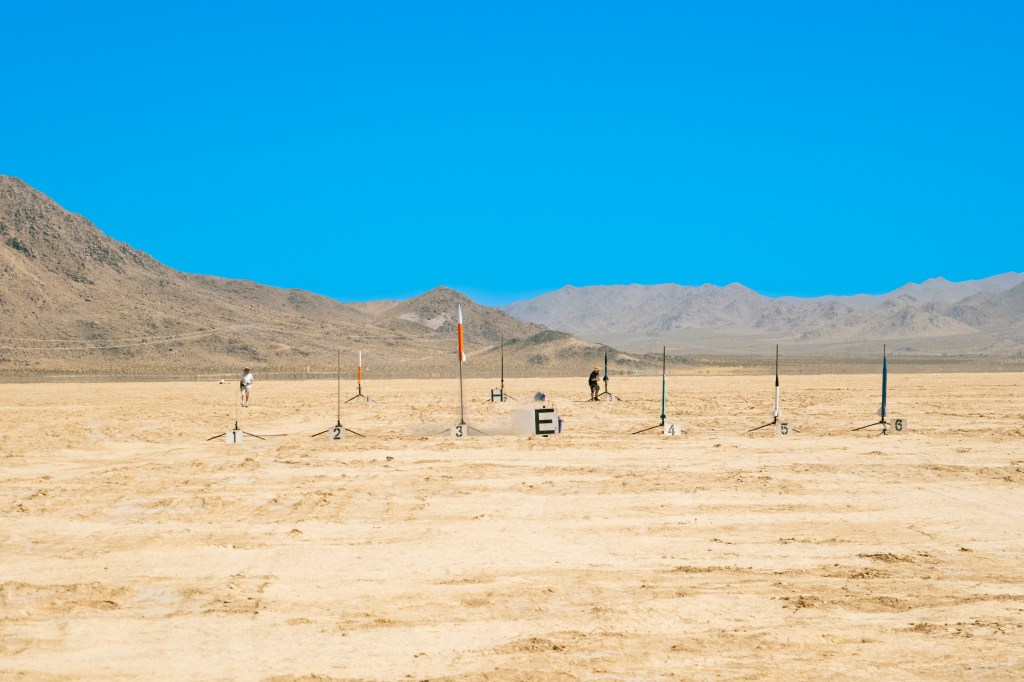
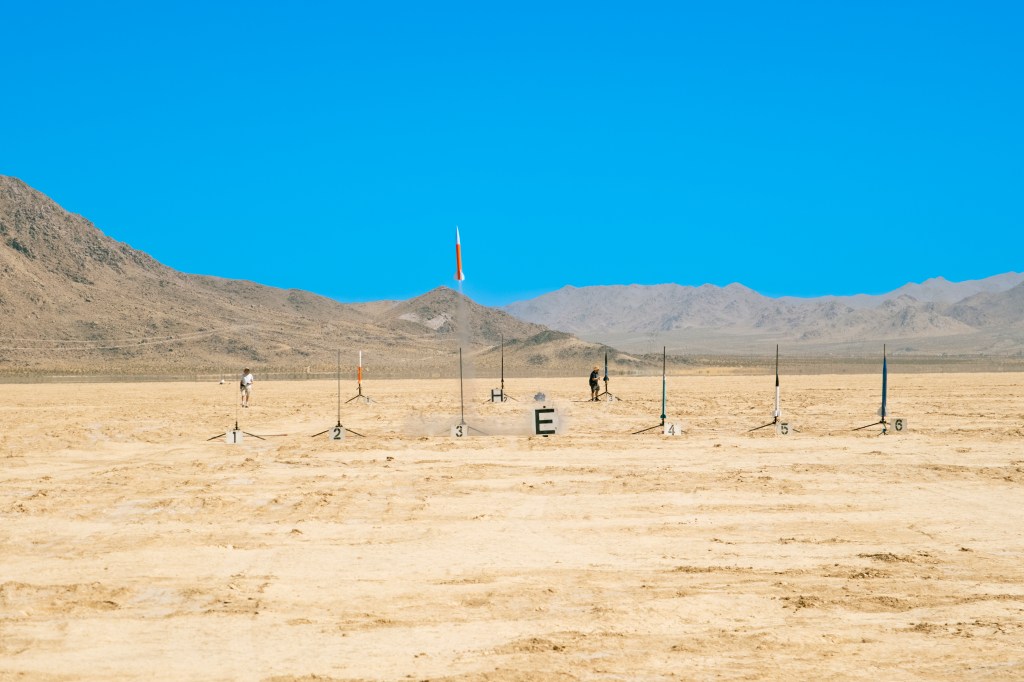
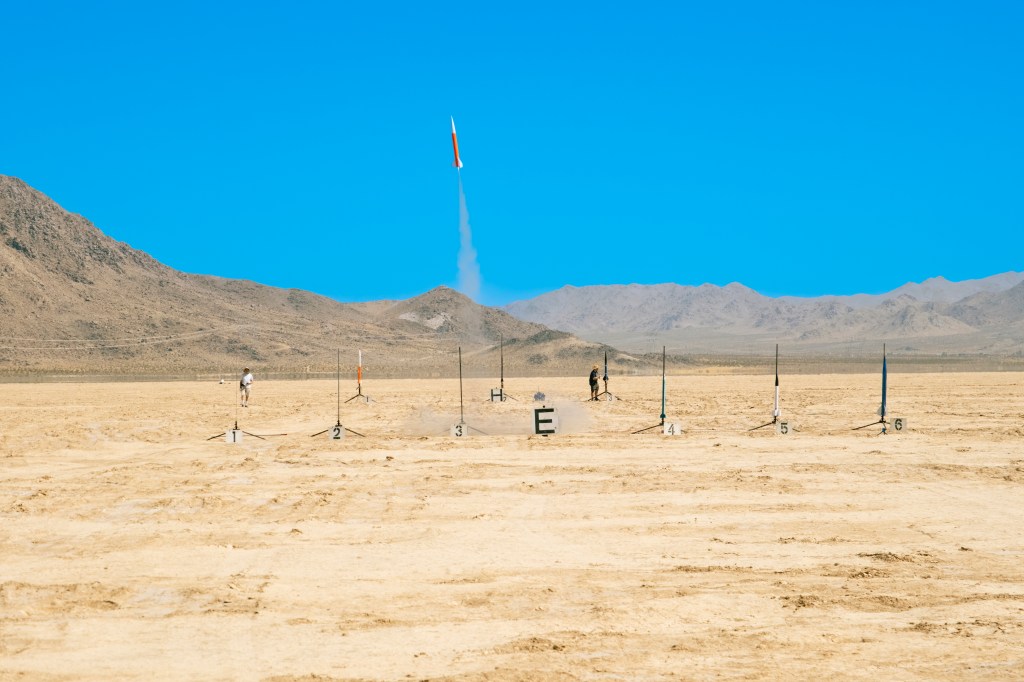
Relief bloomed in my chest as I saw the bright orange parachute blossom in the air and interrupt the vehicle’s stable, ballistic course. I think I even let out an audible cheer as I watched my rocket slowly drift down to earth.
Once the all-clear was given for retrieval, I trekked out over the desert and ran down my rocket. The wind had caught the parachute and dragged it several meters over the lakebed. It was in remarkably good shape. Part of the fuselage had torn out where the tether that connects to the nosecone had been yanked out (an effect known as a “zipper”) but that’s a common sight on lightweight rockets such as mine. The chute was a little charred but entirely functional, and the tether had held firm to the nosecone. The fins were all in place, and so too was the burnt-out motor.
I watched as Gary and Sarah sent their own vehicles aloft only to come back down safely, and then we presented them each to Neil for inspection. Satisfied with our flights, he signed off on our paperwork, and congratulated us on having achieved our level one certifications.
Overall, achieving a level one high-power rocket certification is something most anyone can do. It only requires a small bit of technical know-how, and the willingness to apply the requisite time, effort, and expense. If you’re a fan of rocketry, aircraft, or just of science and engineering generally, I highly recommend it as a fascinating way to expand your knowledge and experience, and to open new vistas for exploration as an individual and perhaps as a group.
And am I now a steely-eyed missile man? I don’t think so. I believe it takes more than one successful high-power launch to gain such a lofty title; but perhaps I’m on my way.
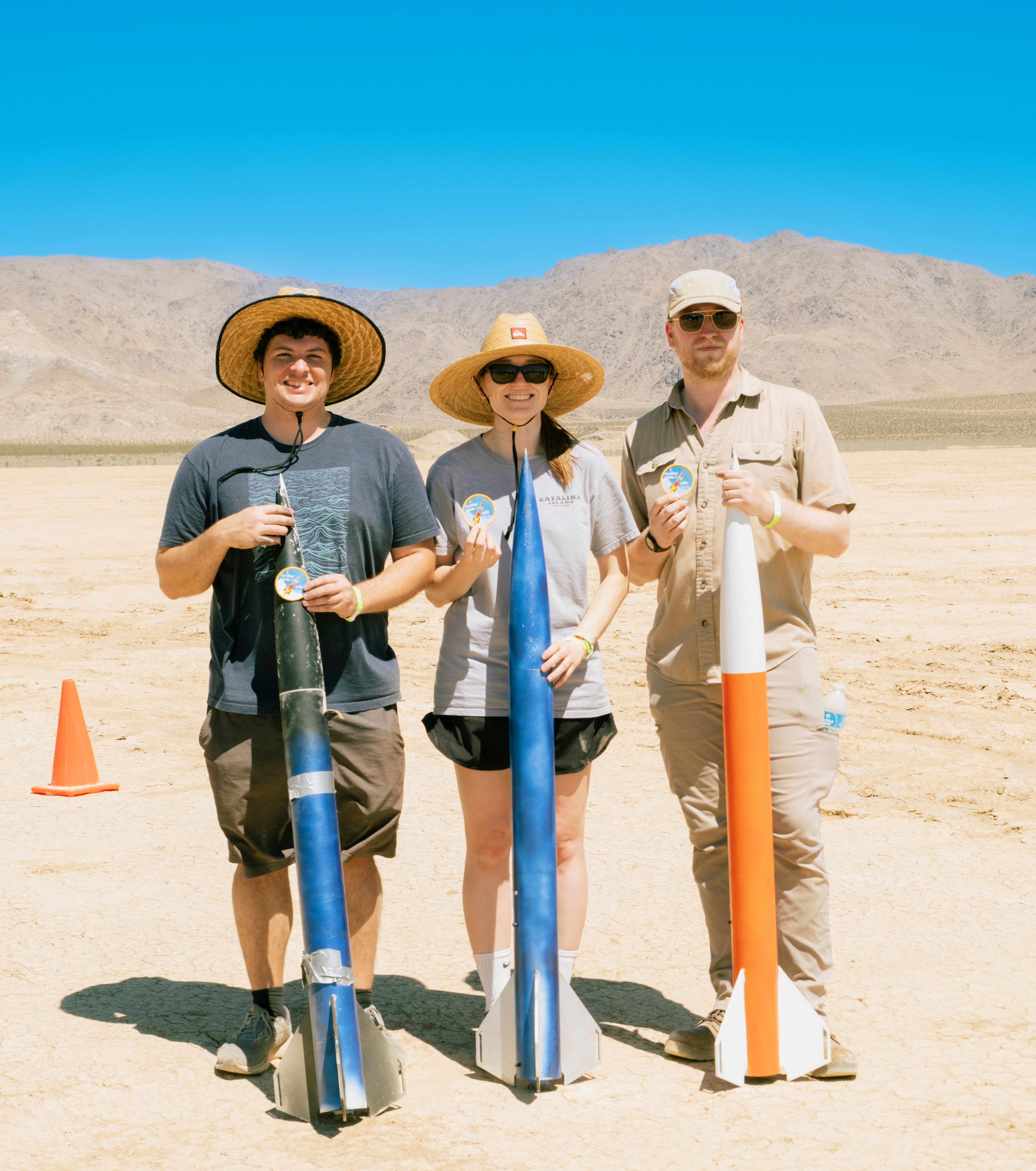
A very special thank you to Marvin Fussell: The Talkative Photographer, for the on ground images!



Leave a Reply